ADD vs. ADHD: What’s the Difference? (Symptoms & Types Explained)
Do you often feel like your brain is in a fog, yet you don’t fit the stereotype of someone who can’t sit still? You might find yourself searching for the difference between add vs adhd because the standard definitions just don’t seem to match your reality. You aren’t running around the room or interrupting conversations, but you might struggle to finish a simple task or constantly lose your keys.
This confusion is incredibly common. For decades, many people used the term "ADD" to describe attention problems without hyperactivity. However, medical terminology has evolved, leaving many adults wondering where they fit in.
In this guide, we will clear up the confusion surrounding add vs adhd. You will learn how the definitions have changed, discover the three specific types of the condition, and explore a detailed symptom comparison to help you understand your unique brain wiring. If you suspect your focus issues go deeper than just "being scattered," you can also try our comprehensive ADHD test to see how your traits align with common patterns.
The Short Answer: Is ADD the Same Thing as ADHD?
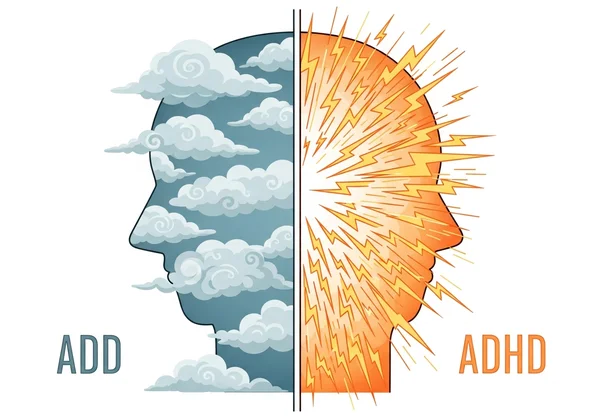
The short answer is yes and no. Technically, "ADD" (Attention Deficit Disorder) is an outdated medical term. It is no longer a separate diagnosis. Today, what we used to call ADD is officially known as ADHD, Predominantly Inattentive Presentation.
However, people still use the terms add vs adhd to distinguish between two very different experiences. One is internal, quiet, and dreamy (ADD). The other is external, energetic, and impulsive (ADHD).
From DSM-III to DSM-5: A Brief History of the Name Change
To understand the confusion, we have to look back at history. In 1980, the DSM-III (the manual doctors use for diagnosis) officially named the condition "ADD" and allowed for a version with or without hyperactivity.
However, in 1987, the name was changed to ADHD (Attention-Deficit/Hyperactivity Disorder). This umbrella term confused many people who didn't feel "hyper." Finally, the DSM-5 refined this by keeping the name ADHD but breaking it down into three distinct "presentations" or types. This change acknowledged that you can have the disorder without ever being physically hyperactive.
Why "Attention Deficit" Is the Core Issue (Regardless of Hyperactivity)
Whether you use the term ADD or ADHD, the core neurological issue is often the same: a regulation problem of the brain's executive functions.
It isn't that you have a "deficit" of attention; it is that you have trouble regulating it. You might hyperfocus on a video game for six hours but find it physically painful to spend five minutes on a spreadsheet. Understanding this nuance helps you realize that a quiet, daydreaming brain can struggle just as much as a hyperactive one.
The 3 Types of ADHD: Where "ADD" Fits Now
When looking at add vs adhd, it helps to stop thinking of them as two separate disorders and start viewing them as three different ways the same condition shows up.
Type 1: Predominantly Inattentive Presentation (Formerly ADD)
This is what most people mean when they say "ADD." Individuals with this presentation are not disruptive in class or meetings. Instead, they may appear spacey, dreamy, or easily confused. They struggle with organization, following through on instructions, and attention to detail. Because they aren't "causing trouble," they are the most likely group to go undiagnosed until adulthood.
Type 2: Predominantly Hyperactive-Impulsive Presentation
This type aligns with the classic stereotype. Signs include excessive talking, fidgeting, an inability to stay seated, and interrupting others. It is much more noticeable than the inattentive type, which is why it is often diagnosed much earlier in childhood.
Type 3: Combined Presentation (Most Common)
As the name suggests, this type involves a mix of both inattentive and hyperactive symptoms. You might lose your phone daily (inattentive) but also feel a constant sense of internal restlessness (hyperactive).
Symptom Deep Dive: Inattentive (ADD) vs. Hyperactive Traits
Identifying your type often comes down to recognizing your daily struggles. The difference between the two presentations isn't just medical semantics; it defines your lived experience.
The "Daydreamer" Profile: Signs of Inattention
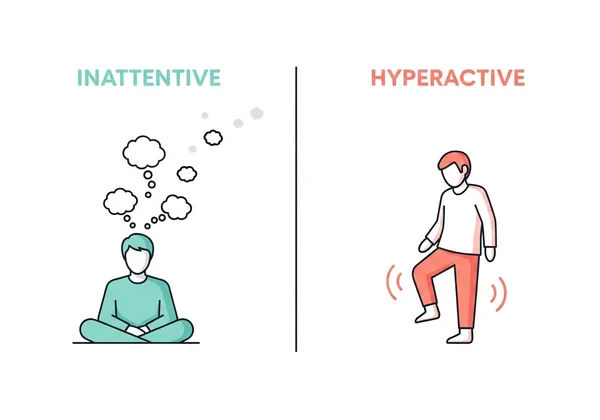
If you align more with the old "ADD" label, your struggles are likely internal. You might not look busy, but your brain is exhausted from trying to keep track of life.
- Brain Fog: You feel like you are trying to think through peanut butter.
- Time Blindness: You sit down to do a task for "five minutes" and suddenly three hours have passed.
- Task Paralysis: You have a to-do list, but you feel physically unable to start the first item.
- Working Memory Glitches: You walk into a room to get something and immediately forget what it was.
- Sensory Overwhelm: Loud noises or bright lights might make it impossible to focus.
The "Motor" Profile: Signs of Hyperactivity
On the flip side of the spectrum, hyperactivity in adults doesn't always look like running around. It often evolves into "internalized hyperactivity."
- Fidgeting: You constantly tap your foot, click pens, or shift in your chair.
- Racing Thoughts: Your brain feels like a browser with 50 tabs open.
- Impulsive Interrupting: You finish people's sentences because you can't wait for them to get to the point.
- Restlessness: You feel like you are driven by a motor and can't relax without feeling guilty.
Comparison Chart: Visualizing the Differences
To help visualize the add vs adhd difference, here is a quick breakdown of how these traits manifest differently.
| Feature | "ADD" (Inattentive) | "ADHD" (Hyperactive) |
|---|---|---|
| Primary Struggle | Focus & Organization | Impulse Control & Movement |
| Energy Level | Often low, sluggish, or foggy | High, restless, or intense |
| Social Interaction | May seem withdrawn or not listening | May talk excessively or interrupt |
| Mistake Pattern | Careless errors due to missing details | Rushing through tasks too quickly |
| Reaction to Tasks | Procrastination or avoidance | Impatient regarding completion |
If you see yourself in the "Inattentive" column, it is crucial to understand that your struggle is just as valid as the hyperactive type. You can explore our ADHD online test to see which column your specific traits lean towards.
What If These Symptoms Sound Like You? (Next Steps)
Reading about these symptoms can be an emotional experience. For many, seeing the add vs adhd distinction laid out clearly is the first time they don't feel "lazy" or "broken."
Why Self-Awareness is the First Step (Before Diagnosis)
Before seeking a medical diagnosis, it is helpful to have a clear picture of your own patterns. Doctors often rely on your self-reporting to make a diagnosis. If you can clearly articulate, "I struggle with inattention, but I am not hyperactive," you advocate for yourself much more effectively.
How to "Organize Your Thoughts" with Our Screening Tool
It is difficult to be objective about your own brain. You might downplay your struggles or think "everyone does that." This is where a structured screening tool becomes valuable.
Our tool is designed to act as a mirror. It doesn't diagnose you—only a doctor can do that. Instead, it helps you organize your scattered experiences into data. By answering specific questions about frequency and severity, you get a report that highlights your symptom clusters.
- It’s Private: No one sees your results but you.
- It’s Detailed: It looks for nuances between add vs adhd traits.
- It’s Educational: The goal is to help you understand your behavior, not just label it.
If you are ready to stop guessing and start understanding, you can check your patterns now.
Start Your Free Pattern Check (No Login Required)
Why "ADD" is Often Missed in Adults and Women
One of the biggest reasons people search for this topic is that they were missed as children. The "ADD" (inattentive) profile is much subtler than the hyperactive one, leading to millions of undiagnosed adults.
The "Quiet" Struggle: How Adult Symptoms Differ from Childhood
As we grow up, ADHD symptoms often mature with us. Hyperactivity might turn into inner restlessness. Inattention might turn into poor money management or relationship issues.
Adults often develop coping mechanisms—like anxiety or extreme perfectionism—to mask their add vs adhd symptoms. You might arrive at work 30 minutes early because you are terrified of being late. To the outside world, you look organized. Inside, you are exhausted.
Females and the "Spacey" Stereotype: A Gender Gap in Diagnosis
Women are significantly more likely to have the Inattentive presentation (ADD). Unfortunately, societal bias plays a huge role here. A quiet, daydreaming girl in the back of the classroom is often seen as "polite" or "shy," while the hyperactive boy is sent for testing.
Consequently, many women grow up internalizing their struggles. They label themselves as "ditsy" or "disorganized" rather than realizing they have a neurodevelopmental condition. Understanding the add vs adhd symptoms in females is a critical step in closing this diagnosis gap.

Moving Forward: Understanding Your Unique Brain
Ultimately, the debate over add vs adhd is about language, but your experience is about life. Whether you call it ADD or Inattentive ADHD, the challenges you face are real, and they are not a character flaw.
Understanding the difference is the first step toward self-compassion. If your brain works differently, you don't need to force it to fit a standard mold. You need to learn the instruction manual for your specific type.
We encourage you to use resources like our ADHD results explained to gain deeper insight into your cognitive profile. Remember, a label isn't a life sentence; it is simply a tool to help you navigate the world more effectively.
Frequently Asked Questions
Is Inattentive ADHD "less severe" than Hyperactive ADHD?
No, it is not less severe. While Inattentive ADHD (ADD) might be less visible to others, the internal impact can be debilitating. The consequences often include career struggles, financial issues, and low self-esteem, which are just as serious as the challenges faced by those with hyperactive symptoms.
Is ADD considered a learning disability?
Technically, no. ADD/ADHD is classified as a neurodevelopmental disorder, not a learning disability. However, it significantly impacts learning because it affects executive functions like focus and working memory. It often co-occurs with learning disabilities like dyslexia.
Can anxiety be mistaken for Inattentive ADHD?
Yes, this is very common. Anxiety can cause distraction and restlessness, which mimics ADHD. Conversely, untreated ADHD often causes anxiety. Distinguishing between the two usually requires looking at the history of the symptoms; ADHD is typically present from childhood, while anxiety may develop later.
Do symptoms of ADD get better with age?
Symptoms typically evolve rather than disappear. While physical hyperactivity often decreases with age, inattentive symptoms (like disorganization and poor time management) tend to persist into adulthood and can even become more challenging as life responsibilities increase.
What is the difference between a screening tool and a medical diagnosis?
A screening tool is a self-assessment that helps identify the likelihood of traits associated with add vs adhd. It is for educational purposes and provides a "risk profile." A medical diagnosis is a formal evaluation by a psychiatrist or psychologist that confirms the condition and opens the door for treatment options like medication or therapy.