ADHD in Spanish — What TDAH Means and Why It Matters
If you have ever searched for information about ADHD in Spanish, you are not alone. Millions of Spanish-speaking families want clear, reliable answers about attention deficit hyperactivity disorder — but language barriers often make finding trustworthy information difficult. In Spanish, ADHD is called TDAH, short for Trastorno por Déficit de Atención con Hiperactividad. Understanding this term is the first step toward recognizing symptoms, breaking cultural stigma, and getting the right support. If you would like to explore an ADHD screening tool as a starting point, that option is available to you. This guide explains what ADHD means in Spanish, how symptoms are described, and where to find helpful resources — whether for yourself, your child, or someone you care about.
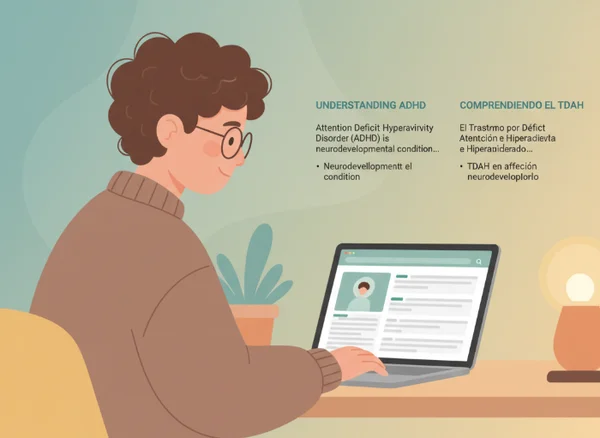
What Is ADHD Called in Spanish?
ADHD stands for Attention Deficit Hyperactivity Disorder. In Spanish, this condition is referred to as TDAH. The term is used across most Spanish-speaking countries, including Mexico, Spain, Colombia, Argentina, and many others.
When you encounter ADHD in Spanish, you will almost always see it written as TDAH. Both abbreviations refer to the same neurodevelopmental condition. The key difference is simply the language used to describe it.
The Full Spanish Term for ADHD
The full translation of ADHD in Spanish is Trastorno por Déficit de Atención con Hiperactividad. Here is a quick breakdown of each word:
- Trastorno — Disorder
- Déficit — Deficit
- Atención — Attention
- Hiperactividad — Hyperactivity
You may sometimes see slight variations, such as Trastorno de Déficit de Atención e Hiperactividad. Both forms are widely accepted and mean the same thing.
What Does TDAH Stand For?
TDAH stands for Trastorno por Déficit de Atención con Hiperactividad. It is the standard medical abbreviation used by healthcare professionals, educators, and mental health organizations in Spanish-speaking countries. When you visit a doctor in a Spanish-speaking country and discuss attention or focus concerns, TDAH is the term they will likely use.
Key ADHD Symptoms and Their Spanish Equivalents
Understanding ADHD symptoms in both languages can help you describe your experiences more clearly — whether you are speaking with a bilingual doctor, translating for a family member, or researching ADHD in Spanish for the first time.
ADHD symptoms generally fall into three main categories. Here is how each one translates into Spanish.
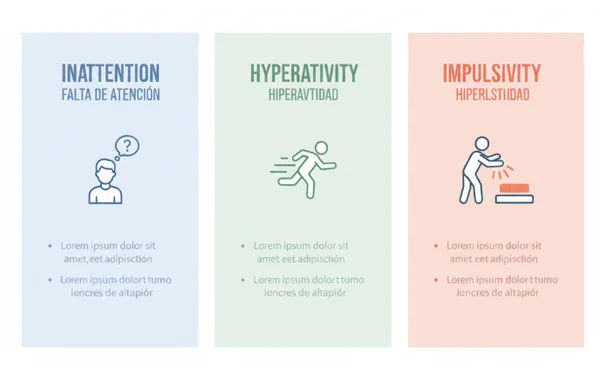
Inattention — Falta de Atención
Inattention, or falta de atención, includes difficulty staying focused, being easily distracted, and struggling to follow through on tasks. In Spanish, common descriptions include:
- No puede concentrarse — Cannot concentrate
- Se distrae fácilmente — Gets easily distracted
- Pierde cosas con frecuencia — Frequently loses things
- No sigue instrucciones — Does not follow instructions
Hyperactivity — Hiperactividad
Hyperactivity, or hiperactividad, involves excessive movement, fidgeting, and difficulty sitting still. In Spanish, you might hear:
- No puede quedarse quieto — Cannot stay still
- Habla demasiado — Talks too much
- Siempre está en movimiento — Always on the move
Impulsivity — Impulsividad
Impulsivity, or impulsividad, refers to acting without thinking, interrupting others, or making hasty decisions. Common Spanish phrases include:
- Actúa sin pensar — Acts without thinking
- Interrumpe a los demás — Interrupts others
- No puede esperar su turno — Cannot wait their turn
Is ADD the Same as ADHD in Spanish?
Many people wonder about the difference between ADD and ADHD in Spanish. ADD (Attention Deficit Disorder) was an older term used when hyperactivity was not the primary symptom. Today, the medical community uses ADHD — or TDAH in Spanish — as the umbrella term for all presentations.
In Spanish, you may still encounter Trastorno de Déficit de Atención (TDA) without the hyperactivity component. However, the current standard in both English and Spanish medical practice uses ADHD/TDAH, which includes three recognized presentations:
- Predominantly inattentive — Predominantemente inatento
- Predominantly hyperactive-impulsive — Predominantemente hiperactivo-impulsivo
- Combined presentation — Presentación combinada
So when someone refers to ADD in Spanish, they are usually talking about the inattentive presentation of TDAH.
How ADHD Is Understood in Spanish-Speaking Cultures
ADHD awareness varies widely across Spanish-speaking communities. Cultural beliefs, family dynamics, and access to mental health education all shape how ADHD is perceived and discussed.
Cultural Attitudes Toward Mental Health and ADHD
In many Hispanic and Latino households, mental health conditions carry significant stigma. ADHD may be dismissed as laziness, poor discipline, or a phase that children will outgrow. These attitudes can delay recognition and support.
For adults, admitting to attention difficulties can feel even harder. Many Spanish-speaking adults grew up without ever hearing the term TDAH. As a result, they may not realize that their lifelong struggles with focus, organization, or impulsivity could be connected to a recognized condition.
Common Myths About ADHD in Hispanic Families
Several myths about ADHD persist in Spanish-speaking communities:
- "ADHD is not real — it is just bad behavior." ADHD is a well-documented neurodevelopmental condition recognized by medical organizations worldwide.
- "Only children have ADHD." ADHD often continues into adulthood. Many adults are diagnosed later in life.
- "Medication is the only option." Treatment can include therapy, behavioral strategies, educational support, and lifestyle changes — medication is one option, not the only one.
- "ADHD is caused by too much screen time." There is no scientific evidence that screen time causes ADHD, though excessive screen use may worsen some symptoms.
Breaking these myths starts with access to accurate, culturally sensitive information in Spanish.

Common Barriers to ADHD Diagnosis in Hispanic Communities
Even when families recognize potential ADHD symptoms, getting a proper evaluation can be challenging. Several barriers make the path to diagnosis harder for Spanish-speaking individuals.
Language Barriers in Healthcare Settings
When healthcare providers do not speak Spanish — or when translated materials are unavailable — families may struggle to describe symptoms accurately. Important nuances about behavior, emotions, and daily functioning can get lost in translation.
This is one reason learning ADHD vocabulary in both English and Spanish matters. Being able to describe symptoms clearly in either language helps ensure a more accurate evaluation.
Limited Access to Bilingual Specialists
Finding a mental health professional who speaks Spanish and specializes in ADHD can be difficult, especially in rural areas. Long wait times and limited insurance coverage add further obstacles.
Telehealth services have expanded access for some families. Online evaluations and screenings in Spanish can serve as a helpful first step before scheduling an in-person appointment.
How to Talk About ADHD in Spanish With Your Doctor
If you or a family member wants to discuss ADHD concerns with a doctor, knowing key phrases in Spanish can make the conversation easier and more productive.
Helpful Spanish Phrases for Describing ADHD Symptoms
Here are some useful phrases you might use during a medical appointment:
- "Mi hijo tiene dificultad para concentrarse." — My child has difficulty concentrating.
- "No puede quedarse quieto en clase." — He/she cannot sit still in class.
- "Se distrae muy fácilmente." — He/she gets distracted very easily.
- "Actúa sin pensar en las consecuencias." — He/she acts without thinking about consequences.
- "Creo que podría tener TDAH." — I think he/she might have ADHD.
Questions to Ask a Doctor About TDAH
When meeting with a healthcare provider, consider asking:
- "¿Podría ser TDAH?" — Could this be ADHD?
- "¿Qué tipo de evaluación se necesita?" — What type of evaluation is needed?
- "¿Hay opciones de tratamiento que no incluyan medicación?" — Are there treatment options that do not include medication?
- "¿Puede referirme a un especialista que hable español?" — Can you refer me to a specialist who speaks Spanish?
Having these questions prepared in advance can help you feel more confident and get clearer answers.
A Simple Way to Reflect on Your Attention Patterns
Before pursuing a formal evaluation, many people find it helpful to reflect on their own attention patterns. A screening tool can help you organize your thoughts and identify areas where you might want professional guidance.
An ADHD screening is not a diagnosis. It is a way to better understand your experiences — whether you tend to lose focus during conversations, forget important tasks, or feel restless throughout the day.
If you are curious about where you stand, you can try an ADHD screening tool that takes just a few minutes. The results are private, confidential, and designed to help you reflect — not to label or diagnose.
This screening tool is for educational and self-understanding purposes only. It does not replace a professional evaluation by a qualified healthcare provider.
Where to Find ADHD Resources in Spanish
Access to reliable, Spanish-language ADHD resources is growing. Here are some trusted starting points:
- MedlinePlus (Spanish) — Offers comprehensive, medically reviewed ADHD information in Spanish, including symptoms, treatment options, and when to see a doctor.
- CDC (Centers for Disease Control and Prevention) — Provides Spanish-language fact sheets and guidance about ADHD diagnosis and management.
- CHADD (Children and Adults with ADHD) — Features articles and community support resources, with some content available in Spanish.
- Understood.org — Offers multilingual resources for parents of children with learning and attention challenges, including ADHD.
- Local community health clinics — Many clinics in areas with large Spanish-speaking populations offer bilingual services and ADHD evaluations.
If you prefer an online starting point, you can visit reputable screening sites that offer tools in multiple languages to help you better understand your attention patterns before talking to a professional.
Taking the First Step Toward Understanding ADHD
Learning the ADHD meaning in Spanish is more than a translation exercise. It is about opening doors to support, self-understanding, and better communication with the people who can help.
Whether you are a parent trying to understand your child's behavior, an adult who has always struggled with focus, or someone helping a Spanish-speaking friend or family member — knowing that ADHD is TDAH gives you the language to start the conversation.
Here are the key takeaways from this guide:
- ADHD in Spanish is called TDAH — Trastorno por Déficit de Atención con Hiperactividad.
- Symptoms include inattention (falta de atención), hyperactivity (hiperactividad), and impulsivity (impulsividad).
- Cultural stigma and language barriers may delay diagnosis in Hispanic communities.
- Learning key Spanish phrases can help you communicate better with healthcare providers.
- A screening tool can be a helpful first step for self-reflection — not a substitute for professional evaluation.
You deserve access to clear information in the language you are most comfortable with. If you are ready to take the next step, consider exploring an ADHD self-assessment designed for self-understanding and reflection.
Frequently Asked Questions
What is the Spanish word for ADHD?
The Spanish word for ADHD is TDAH, which stands for Trastorno por Déficit de Atención con Hiperactividad. This term is used by healthcare professionals and educators throughout Spanish-speaking countries.
Are ADHD symptoms the same in Spanish and English?
Yes, ADHD symptoms are the same regardless of language. The three core categories — inattention, hyperactivity, and impulsivity — are recognized internationally, though cultural context may affect how symptoms are described or perceived.
Can I take an ADHD screening test in Spanish?
Yes. Several online platforms offer ADHD screening tools available in Spanish. These tools are designed for self-reflection and can help you organize your thoughts before speaking with a healthcare professional.
How can I find a bilingual therapist who understands ADHD?
You can start by asking your primary care doctor for a referral to a bilingual mental health specialist. Online therapy platforms and community health clinics in areas with large Hispanic populations also offer bilingual ADHD support.
Is ADHD more common in certain cultures?
ADHD occurs across all cultures and ethnic groups at similar rates. However, diagnosis rates may differ due to cultural attitudes, access to healthcare, and awareness of the condition within specific communities.
What is the difference between ADD and ADHD in Spanish?
ADD, or TDA in Spanish, was an older term for the inattentive presentation of ADHD. Today, the standard term in both English and Spanish is ADHD/TDAH, which covers all three presentations: inattentive, hyperactive-impulsive, and combined.