ADHD Organization Strategies: Practical Tips for Families with ADHD
The chaos of clutter, the stress of missed deadlines, and the frustration of misplaced items are common in many households. If these struggles sound familiar to your family, you are not alone. For families living with ADHD traits, these everyday challenges can feel completely overwhelming. Living in a messy environment often leads to increased anxiety and a feeling of being "stuck."
But what if you could transform your home from a source of stress into a supportive environment? You can create a space that actually works with your brain's unique wiring instead of against it. Understanding how your brain processes information is the first step toward peace. Many people find that taking an ADHD test helps them identify specific areas where they need the most support.
In this guide, we will explore practical, research-backed strategies for creating an ADHD-friendly home. We will focus on reducing friction and promoting success for every family member. By the end of this article, you will have a roadmap to a more organized and harmonious living space.
Understanding ADHD's Impact on Home Organization
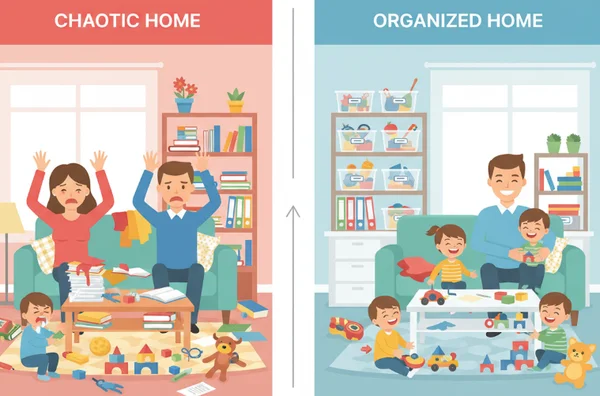
To fix a problem, we must first understand why it exists. ADHD is not about being "lazy" or "messy." It is a neurological difference that changes how a person interacts with their surroundings. When a home is disorganized, it is often a reflection of how the ADHD brain struggles to filter information and prioritize tasks.
Why Traditional Organization Methods Often Fail ADHD Brains
Most organization advice follows a "minimalist" or "hidden" approach. Experts often tell you to put things away in drawers or opaque boxes to reduce visual clutter. While this works for many people, it is often a recipe for disaster for those with ADHD.
For the ADHD brain, "out of sight" often means "out of mind." If an object is hidden in a drawer, the person may forget it exists entirely. Later, they might buy a duplicate or tear the house apart looking for it. Traditional methods also rely on complex filing systems that require too many steps. If a system takes more than two or three steps to complete, an ADHD brain will likely abandon it.
Executive Function Challenges That Affect Home Management
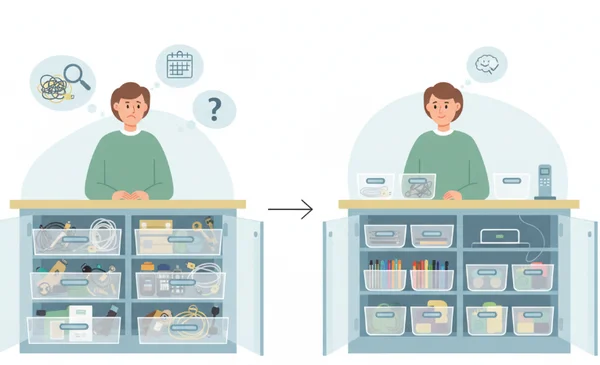
Executive function is a set of mental skills that include working memory, flexible thinking, and self-control. ADHD directly impacts these skills, making home management difficult. When you try to clean a room, your brain must decide where to start, stay focused on the task, and remember where things belong.
For someone with ADHD, this process can feel like a "brain fog." They might start cleaning the kitchen, then see a book that belongs in the bedroom. They walk to the bedroom and immediately start folding laundry instead. This "ping-ponging" happens because the brain struggles to prioritize. Taking an online ADHD test can help you understand these cognitive patterns. This process helps you see why certain chores feel so difficult and how your brain manages daily tasks.
Creating Structure with Visual Organization Systems
Since "out of sight" leads to "out of mind," the best solution for an ADHD-friendly home is visual organization. This means making the structure of your home visible and easy to navigate at a glance. We want to reduce the mental energy required to find or put away items.
Label Everything: The Power of Visual Cues
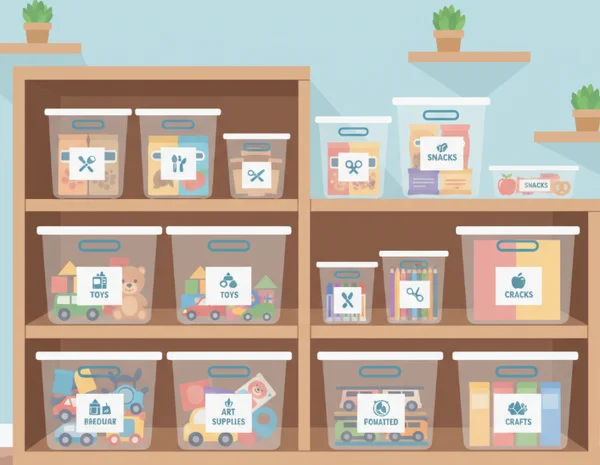
Labels act as external memories. They tell your brain exactly what goes where so you don't have to think about it. For children, you can use labels with both words and pictures. For adults, clear text is usually enough.
Use clear plastic bins instead of solid colored ones. This allows you to see the contents without opening the lid. Place labels on the outside of:
- Pantry shelves (e.g., "Snacks," "Pasta," "Baking")
- Toy bins
- Closet drawers (e.g., "Socks," "T-shirts")
- Laundry baskets
When every item has a clearly labeled "home," the process of cleaning up becomes much faster. You no longer have to make a decision about where an item goes. The label makes the decision for you.
Color Coding Strategies for Different Family Members
Color coding is a powerful tool for families with multiple members. It provides an instant visual signal that the brain can process faster than text. You can assign a specific color to each person in the house.
For example, if "Sarah" is assigned blue, she should have a blue laundry basket, a blue towel, a blue folder for school papers. If "James" is assigned green, his items follow the same pattern. This system helps prevent arguments over whose mess is whose. It also makes it easy for parents to see who needs help with their organization. If you are unsure which family members might benefit most from these systems, you can start your test to look for common traits across the household.
Establishing ADHD-Friendly Routines and Habits
Organization is not just about where you put your things; it is also about what you do every day. Routines provide the "rails" that help a family move through the day without constant decision fatigue. For ADHD brains, routines help automate boring tasks so they actually get done.
Morning and Evening Routines That Stick
The most stressful times for ADHD families are often the "transitions." This includes waking up and getting out the door, or winding down for bed. To make these routines stick, they must be simple and visual.
Create a "Launch Pad" near the front door. This is a designated spot where backpacks, keys, wallets, and shoes must live. The routine is simple: when you come home, everything goes on the Launch Pad. In the evening, you check the Launch Pad to ensure everything is ready for the next morning.
For evening routines, try "body doubling." This means doing chores at the same time as someone else. Even if you are working on different tasks, the presence of another person helps keep the ADHD brain on track. You might spend 15 minutes as a family doing a "tidy sweep" before bed. This prevents the clutter from building up into an overwhelming mountain.
Building Habits Using the "Two-Minute Rule"
The "Two-Minute Rule" is a life-changing habit for those with ADHD. The rule is simple: If a task takes less than two minutes to complete, do it immediately.
Common two-minute tasks include:
- Hanging up a coat.
- Putting a dish in the dishwasher.
- Throwing away a piece of junk mail.
- Wiping down a counter.
ADHD brains often struggle with "task initiation," which is the ability to start a job. By telling yourself the task will only take two minutes, you lower the mental barrier to starting. Over time, these small actions prevent the house from falling into chaos. If you find that even two-minute tasks feel impossible, it might be helpful to see your results from a screening tool to see if executive dysfunction is playing a major role in your daily life.
Reducing Distractions and Creating Focus Zones
A home should be a place of rest, but for someone with ADHD, it can be a minefield of distractions. From the hum of the refrigerator to the pile of mail on the table, these small distractions can pull focus away from important tasks.
Designating Quiet Spaces for Concentration
Every ADHD-friendly home needs a "Focus Zone." This is a dedicated area for work, homework, or deep thinking. This space should be as boring as possible to help maintain concentration.
To create an effective Focus Zone:
- Face the wall rather than a window to limit visual distractions.
- Use noise-canceling headphones or a white noise machine to block out household sounds.
- Keep only the tools needed for the current task on the desk.
- Use "dimmer" lighting to create a calm atmosphere.
Having a specific place for focus trains the brain. When you sit in that specific chair, your brain begins to recognize that it is time to work, not play.
Managing Digital Distractions in the Home
In the modern world, the biggest clutter isn't always physical; it's digital. Notifications, social media, and endless streaming can hijack an ADHD brain for hours. Managing these distractions is essential for a peaceful home.
Create a "Phone Hotel" or a charging station in a common area. During family meals or before bed, all phones go to the "hotel." This physical separation helps break the habit of mindless scrolling. Additionally, try to keep computers and gaming consoles in shared spaces rather than bedrooms. This allows for natural accountability and helps maintain better sleep hygiene.
When it comes down to it, creating an ADHD-friendly home isn't about perfection. It's about making small, sustainable changes that reduce friction and support your family's unique needs. By moving toward visual systems, establishing simple routines, and creating focus zones, you can transform your living space into a sanctuary.
Remember, progress is better than perfection. You don't have to organize the whole house today. Start by identifying one area that causes the most frustration—perhaps the entryway or the kitchen pantry—and implement just one strategy from this guide.
The journey to a more organized home starts with understanding. If you or a family member are struggling with focus or organization, taking a moment to try our free tool can provide the clarity you need. Our AI-driven report offers insights into your specific traits, helping you build a home environment that truly supports your success. Small changes today can lead to a much more peaceful and harmonious home tomorrow.
Frequently Asked Questions
How do I know if my family's organizational challenges might be related to ADHD?
Organizational struggles are common, but with ADHD, they are often chronic and pervasive. If you find that traditional tips don't work, or if the "mess" causes significant emotional distress and conflict, it may be related to ADHD traits. You can start your test to get an initial screening and a detailed report on how these traits might be affecting your daily life.
What's the most important change to make first when creating an ADHD-friendly home?
The most effective first step is usually implementing visual organization. Switching to clear storage bins and adding labels to common areas provides immediate relief for the ADHD brain. It reduces the mental load of searching for items and makes the "home" for every object obvious.
How can I get buy-in from family members who don't have ADHD?
Communication is key. Explain that these systems aren't just for the person with ADHD; they make the home more efficient for everyone. Focus on the benefits, such as "less time spent looking for keys" or "fewer arguments about chores." When everyone sees that the system reduces stress, they are more likely to support it.
Are there specific organization products that work best for ADHD brains?
Yes! Look for products that promote visibility. Clear plastic containers, open shelving, wall-mounted pegboards, and color-coded folders are excellent choices. Avoid "deep" storage where items get buried at the bottom. The goal is to keep as much as possible visible or easily accessible.
How long does it typically take to see results from these organization strategies?
You may feel an immediate sense of relief once a visual system is in place. However, building new habits and routines typically takes 3 to 4 weeks of consistent practice. Be patient with yourself and your family. If a system isn't working after a month, don't be afraid to tweak it to better fit your needs. You can always see your results again if you want to track how your understanding of your traits has evolved.