ADHD Test: Autism Differences & When to Screen
Navigating the world of neurodivergence can be confusing, especially when symptoms seem to overlap. You might find yourself struggling with focus, social interactions, or intense emotions and wonder about the cause. This often leads to a common and important question: Are my symptoms signs of ADHD, Autism, or both?
You're not alone in this uncertainty. ADHD (Attention-Deficit/Hyperactivity Disorder) and Autism Spectrum Disorder (ASD) are separate neurodevelopmental conditions. They share traits that blur the lines. You often need pro guidance to sort them out. Understanding their key differences is the first step toward clarity and finding the right support.
This guide will help you decode the nuances between ADHD and Autism. We'll explore the shared symptoms, highlight the critical differences, and explain how a preliminary screening can be a valuable tool. If you're looking for a starting point, a free online screening can offer initial insights into potential ADHD traits in a private and accessible way.
Understanding the Overlap: Why ADHD and Autism Are Often Confused
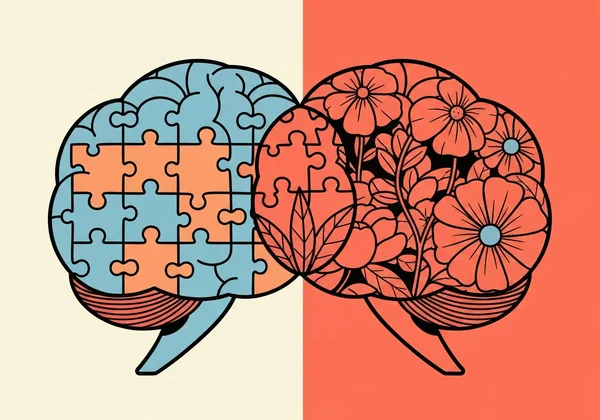
Why do ADHD and Autism get mixed up so often? The main reason is their shared impact on executive functions. These are the mental skills that include working memory, flexible thinking, and self-control. This creates a surface-level similarity in how individuals navigate daily life, school, and work.
Shared Traits: Unpacking Inattention, Hyperactivity, and Social Cues
On the surface, certain behaviors can look almost identical. Someone with either condition might struggle in social situations or have trouble concentrating in a busy office. Let's break down these shared characteristics:
-
Inattention: A child in a classroom who is daydreaming and not following the lesson could have ADHD (distracted by internal or external stimuli) or Autism (deeply absorbed in their own thoughts or a specific interest).
-
Hyperactivity & Restlessness: Fidgeting, restlessness, or constant movement can be a sign of hyperactivity in ADHD. It can also be a form of "stimming" (self-stimulating behavior) in autistic individuals, which helps them regulate sensory input or emotion.
-
Social Challenges: Both individuals with ADHD and Autism may find it hard to make or keep friends. They might miss cues or struggle with chit-chat flow. But the root causes? Totally different for ADHD vs. Autism.

The Roots of Confusion: Similarities in Presentation Across Lifespans
The confusion isn't just about symptoms; it's about how they appear at different life stages. A young child who has frequent emotional outbursts could be experiencing the emotional dysregulation of ADHD or sensory overload related to Autism.
Furthermore, it's possible for someone to have both ADHD and Autism. This co-occurrence, or dual diagnosis, means a person experiences the distinct challenges of both conditions simultaneously. This makes a clear-cut distinction even more complex and highlights the need for careful, nuanced evaluation.
ADHD vs. Autism: Decoding Key Differences in Core Symptoms
While the overlap is significant, the core motivations and internal experiences behind the behaviors are fundamentally different. Understanding these distinctions is key to gaining true insight.
Distinguishing Social Interaction: Different Flavors of Connection
This is one of the most significant areas of difference.
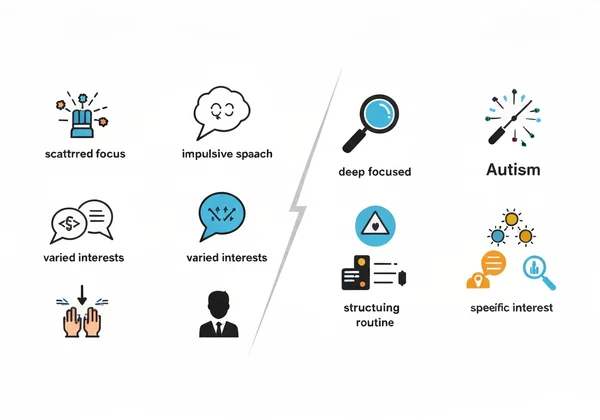
- ADHD: Social difficulties often stem from impulsivity, inattention, and emotional dysregulation. An individual with ADHD might interrupt others, talk excessively, or miss parts of a conversation because their attention has drifted. They generally understand social rules intuitively but struggle to follow them consistently due to their symptoms.
- Autism: Social challenges are typically rooted in a different way of processing the social world. An autistic individual may have difficulty inherently understanding and applying social norms, interpreting body language, or understanding sarcasm. They might prefer solitude or interact in ways that seem atypical because their social motivation and understanding are wired differently.
Attention & Focus: From "Can't Focus" to "Hyperfocus"
How attention works is another major differentiator.
- ADHD: ADHD focus is interest-driven. Boring tasks? Hard to stick with. Fun ones? Hours of hyperfixation. Regulating it is tough, and shifts happen without warning.
- Autism: Autistic individuals often experience "hyperfocus" tied to their deep, specific, and often long-term special interests. This is an intense, profound concentration that can make it difficult to shift their attention to anything else. Unlike ADHD hyperfixation, this focus is less about novelty and more about a sustained passion.
Repetitive Behaviors & Restricted Interests: Key Autism Spectrum Markers
This area is a hallmark of the Autism diagnosis.
- ADHD: People with ADHD thrive on novelty and can quickly cycle through different hobbies and interests. Their behavior is often driven by a search for stimulation and can appear restless or chaotic.
- Autism: A core characteristic of Autism is a preference for routine, predictability, and sameness. This can manifest as repetitive behaviors (stimming like hand-flapping or rocking) and highly focused, restricted interests. These routines and interests provide comfort and structure in a world that can feel overwhelming.
Emotional Regulation: Unique Challenges for Each Condition
Both conditions involve challenges with managing emotions, but the triggers and expressions differ.
- ADHD: Emotional dysregulation is very common. This can look like intense frustration, impatience, and mood swings. A key feature is Rejection Sensitive Dysphoria (RSD), an extreme emotional pain experienced in response to perceived criticism or rejection.
- Autism: Emotional challenges are often linked to sensory overload, disruptions in routine, or difficulty identifying and expressing internal feelings (a trait known as alexithymia). An emotional "meltdown" in an autistic person is an intense response to being completely overwhelmed and is not the same as a temper tantrum.
When to Consider an ADHD Screening Test for Clarity
If you see yourself or a loved one primarily in the descriptions of inattention, impulsivity, and inconsistent focus, an ADHD screening can be a logical and helpful next step.
Who Benefits from an Initial Online ADHD Screening?
An online screening is a valuable starting point for many people, including:
- Questioning Adults: If you've spent years feeling like you're disorganized, constantly behind, or unable to reach your potential, exploring ADHD could provide answers.
- Concerned Parents: If your child's teacher reports issues with focus, hyperactivity, or impulse control in the classroom, a screening can help you organize your thoughts before speaking to a doctor.
- University Students: The transition to higher education often exposes executive function challenges that were previously managed. A screening can help identify if ADHD might be a factor.
Taking an online ADHD test can help you see if your experiences align with the established traits of the condition.

The Role of Online Screening: A First, Confidential Step Towards Understanding
It's important to understand what an online screening is—and what it isn't. It's not a medical diagnosis. Instead, it is a private, low-pressure tool designed to help you gather information. Based on scientifically-informed questions, a screening provides a preliminary look at potential traits.
Results from our screening tool, like the AI-powered report, build confidence. They give you the right language for a more productive conversation with a healthcare professional. It’s an empowering first step on your journey to understanding.
Your Next Steps: Beyond Online Screening to Professional Insight
An online screening result is a piece of the puzzle, not the final picture. True clarity comes from a comprehensive evaluation by a qualified professional who can consider all factors.
Preparing for a Professional Evaluation: What to Bring to Your Doctor
If you decide to seek a formal diagnosis, being prepared can make the process smoother. Here’s what you can do:
- Bring Your Screening Report: Share the results of your ADHD self-assessment as a starting point for discussion.
- List Specific Examples: Write down real-life examples of how your symptoms affect you at work, at home, or in your relationships.
- Include Your History: Note any challenges you remember from childhood or school, as ADHD is a condition that begins in early life.
Why a Formal Diagnosis Matters for Support & Treatment
A formal diagnosis is the gateway to effective support. It allows healthcare providers to recommend tailored strategies, which may include therapy (like CBT), coaching, workplace accommodations, or medication. It validates your experiences. It also provides a clear framework for moving forward and building a life that works with your brain, not against it.
Ready for Clarity? Spotting ADHD vs. Autism Traits
Ever wonder why your focus slips or social chats feel off? ADHD and Autism overlap, but the 'why'—like impulse in ADHD vs. routine needs in Autism—points you toward the right help.
It's totally normal to feel mixed up right now. But a quick screen can swap that fog for real insights. Taking that first step to explore your traits can be incredibly empowering. It replaces uncertainty with information and gives you a foundation for a more informed conversation about your mental health.
Ready to take that first confidential step? Start your free ADHD test today and receive an instant, AI-powered report to help you on your path to clarity.
Frequently Asked Questions About ADHD, Autism, and Testing
Is ADHD a form of autism?
No, ADHD and Autism are separate and distinct neurodevelopmental conditions with different diagnostic criteria. However, they can and often do co-occur, meaning a person can be diagnosed with both.
What feels like ADHD but isn't?
Several other conditions can have symptoms that mimic ADHD. These include anxiety disorders, depression, sleep deprivation, and thyroid issues. A comprehensive evaluation from a healthcare professional is crucial to differentiate between them.
What are the symptoms of ADHD?
ADHD is characterized by a persistent pattern of inattention (e.g., difficulty staying organized, losing things, being easily distracted) and/or hyperactivity and impulsivity (e.g., fidgeting, talking excessively, interrupting others).
Can you test for ADHD online?
You can take a reliable screening test online. An online ADHD screening is a great tool for preliminary self-assessment. It helps you understand if your symptoms align with common ADHD traits but does not provide a medical diagnosis.
What should I do after taking an online ADHD test?
After taking a test, review your personalized report to gain insight into your traits. Reflect on how these patterns show up in your daily life. If the results resonate with you, consider sharing them with a doctor or mental health professional to discuss the next steps for a formal evaluation.