ADHD Test & Executive Function: 12 Skills for an Organized Life
Ever feel like your brain has its own agenda, making daily tasks a monumental challenge? You might struggle to start a project, lose your keys constantly, or find your emotions running the show. For many with ADHD, these struggles stem from challenges with ADHD executive function – the crucial mental skills that govern planning, focus, and self-regulation. Do you wonder if your daily frustrations are linked to ADHD? This guide will unlock the secrets of executive function, show you how ADHD impacts it, and equip you with 12 actionable strategies to bring more order and ease into your life. If you suspect you might have ADHD, taking a free ADHD test online is a crucial first step.
Understanding ADHD's Impact on Executive Function
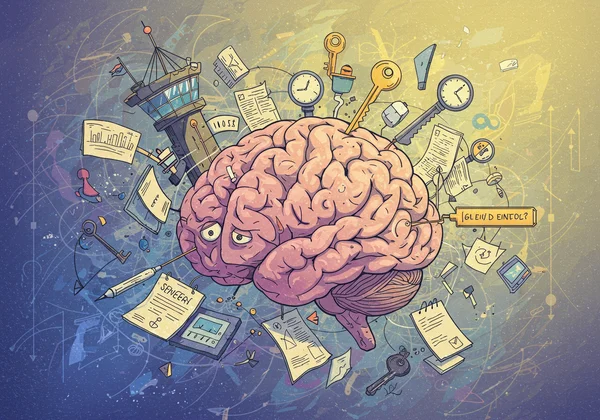
Before we dive into solutions, it's essential to understand the "what" and "why" behind these challenges. Executive functions are the high-level cognitive processes housed in the prefrontal cortex of your brain. Think of them as the CEO or air traffic controller for your mind, directing all the complex operations needed to get through the day. When ADHD is in the picture, this control tower can sometimes feel understaffed and overwhelmed.
What Exactly is Executive Function?
In simple terms, executive function is a set of skills that helps you get things done. These skills allow you to manage your thoughts, actions, and emotions to achieve your goals. They include everything from remembering a grocery list to managing a complex work project and resisting the urge to interrupt someone. Without them, life can feel chaotic and unstructured. Understanding your own executive function profile is a crucial first step, and a preliminary ADHD self assessment can offer valuable clues.
Common Executive Dysfunction Symptoms in Daily Life
When these skills are impaired—a condition known as executive dysfunction—it manifests in ways that can be mistaken for laziness or carelessness. Common executive dysfunction symptoms include:
- Chronic Procrastination: Constantly putting off tasks, even important ones.
- Disorganization: A messy workspace, lost items, and difficulty keeping track of belongings.
- Poor Time Management: Underestimating how long tasks will take and often running late.
- Forgetfulness: Frequently forgetting appointments, deadlines, or where you placed things.
- Emotional Dysregulation: Experiencing intense emotional reactions that feel difficult to control.
- Impulsivity: Acting or speaking without thinking through the consequences.
If this list feels all too familiar, you're not alone. These are hallmark challenges for many adults exploring their neurodiversity.

The Neuroscience Behind ADHD and Executive Challenges
The link between ADHD and executive function isn't just a theory; it's rooted in neuroscience. Research shows that the brains of individuals with ADHD often have differences in the structure and function of the prefrontal cortex. This area is heavily reliant on neurotransmitters like dopamine and norepinephrine to communicate effectively. In ADHD, the regulation of these chemical messengers is believed to be inconsistent, which can disrupt the entire executive function system, making it harder to stay focused, organized, and in control.
Mastering 12 Core Executive Skills for ADHD
The good news is that executive function skills are not set in stone. Like muscles, they can be strengthened with the right exercises and strategies. Let's explore 12 core skills and how you can start improving them today. Taking an online ADHD test can help you identify which of these areas might need the most attention.

Skill 1: Boosting Task Initiation & Overcoming Procrastination
Task initiation is the ability to begin a task without delay. For ADHD brains, the "wall of awful" can make starting feel impossible.
- Strategy: Use the "2-Minute Rule." If a task takes less than two minutes, do it immediately. For larger tasks, commit to working on it for just two minutes. Often, starting is the hardest part.
Skill 2: Effective Time Management & Prioritization
This involves accurately estimating time, meeting deadlines, and deciding what's most important.
- Strategy: Use the Eisenhower Matrix. Divide tasks into four quadrants: Urgent/Important, Not Urgent/Important, Urgent/Not Important, and Not Urgent/Not Important. Focus on the first two.
Skill 3: Cultivating Organization & Planning Habits
Organization and planning are about creating and maintaining systems to keep track of information and materials.
- Strategy: "A home for everything." Designate specific spots for essential items like keys, wallet, and phone. Use digital or physical planners to map out your days and weeks.
Skill 4: Enhancing Working Memory & Focus
Working memory is like your brain's temporary sticky note, holding information you need for a current task.
- Strategy: Externalize information. Write everything down. Use checklists, apps, and alarms to offload the burden from your working memory so you can focus on the task at hand.
Skill 5: Sharpening Emotional Regulation
This is the ability to manage feelings and prevent emotions from derailing you.
- Strategy: Name it to tame it. When you feel a strong emotion rising, pause and identify it ("I am feeling frustrated"). This simple act creates space between the feeling and your reaction.
Skill 6: Improving Response Inhibition
Also known as impulse control, this skill helps you think before you act or speak.
- Strategy: Implement a "pause button." Before making a decision or responding in a conversation, take a deliberate deep breath. This small delay can be enough to choose a more considered response.
Skill 7: Building Cognitive Flexibility
Flexibility is the capacity to switch gears and adapt to changing circumstances or unexpected setbacks.
- Strategy: Practice "Plan B" thinking. For any important task or event, briefly consider what you would do if things didn't go as planned. This mentally prepares you to pivot more easily.
Skill 8: Developing Self-Monitoring
This is the ability to observe your own performance and behavior and assess how you're doing in relation to a goal.
- Strategy: Set periodic check-ins. Use a timer to remind yourself to pause every 25 minutes (the Pomodoro Technique) and ask, "Am I still on task? Is this working?"
Skill 9: Strengthening Goal-Directed Persistence
This skill involves following through on tasks and goals, even when they become boring or difficult.
- Strategy: Break it down. Divide large, intimidating goals into tiny, manageable sub-tasks. Celebrate the completion of each small step to build momentum.
Skill 10: Increasing Stress Tolerance
This is your ability to handle pressure and frustration without becoming overwhelmed.
- Strategy: Create a "stress-relief toolkit." Identify 3-5 simple activities that calm you down (e.g., listening to a specific song, stepping outside for fresh air, stretching) and use them proactively.
Skill 11: Fostering Metacognition
Simply put, metacognition is "thinking about your thinking." It’s the self-awareness to understand your own learning and problem-solving processes.
- Strategy: Conduct a daily review. Spend five minutes at the end of the day reflecting: "What worked well today? Where did I get stuck? What could I try differently tomorrow?"
Skill 12: Honing Social Cognition
This involves interpreting social cues—like body language and tone of voice—to navigate social situations effectively.
- Strategy: Watch and learn. Pay attention to social interactions in movies or TV shows with the sound off. Try to guess what the characters are feeling and thinking based on their non-verbal cues.
Practical Strategies to Improve Executive Function
Beyond skill-specific exercises, you can create an environment that supports your executive functions. The goal is not to "fix" your brain but to build scaffolds that help it perform at its best. If you're wondering where to start, getting a clearer picture of your own profile with a free ADHD test is an excellent first step.

Building External Systems and Support Structures
Since internal regulation can be a challenge, lean on external systems. Use calendars for appointments, task manager apps for to-do lists, and visual timers to make time tangible. A "body double"—a friend or colleague who works quietly alongside you—can be incredibly effective for boosting focus and task initiation. These structures don't just help you get things done; they reduce the mental load required to do so.
Mindful Practices for Self-Regulation and Emotional Control
Mindfulness is a powerful tool for strengthening the prefrontal cortex. Practices like meditation and deep-breathing exercises train your brain to pay attention, notice distractions without judgment, and regulate emotional responses. Even a few minutes a day can improve your ability to pause and choose your actions, rather than being driven by impulse.
When to Seek Professional Guidance for Executive Dysfunction
While these strategies can make a significant difference, they are not a substitute for professional help. If you consistently struggle with executive dysfunction to a degree that it impacts your work, relationships, or well-being, it's wise to seek guidance. A confidential ADHD test online can be a valuable starting point to organize your thoughts and concerns before speaking with a healthcare professional.
Empowering Your ADHD Brain: Your Path to a More Organized Life
Living with ADHD-related executive function challenges can be frustrating, but it doesn't have to define your life. By understanding how your brain works and implementing targeted strategies, you can build a more organized, focused, and fulfilling life. Your brain isn't broken; it just has a different operating system. The key is to find the right user manual.
Ready to take the first step in understanding your unique cognitive profile? Our confidential ADHD test is a free online screening designed to explore your potential traits. Taking this ADHD test for adults can provide the personalized insights you need to begin your journey toward empowerment.
Frequently Asked Questions About ADHD & Executive Function
What are the most common symptoms of executive dysfunction in adults?
In adults, the most common signs include chronic difficulty with starting and finishing tasks (procrastination), poor time management, disorganization in both physical and digital spaces, forgetfulness, and challenges with controlling emotional responses and impulses.
Can an online test help identify executive function challenges related to ADHD?
Yes, a well-designed online ADHD test can be a very helpful first step. While it cannot provide a medical diagnosis, it can screen for patterns and behaviors associated with ADHD and executive dysfunction. The results can give you a clearer understanding of your challenges and provide a structured report to discuss with a doctor. You can take the test here.
What should I do after realizing I struggle with executive function?
The first step is self-compassion. Acknowledge your challenges without judgment. Next, start implementing some of the strategies discussed in this article. To gain more specific insights, consider an ADHD test online like our free ADHD screening. Finally, if your struggles persist, use those insights to seek a professional evaluation for a formal diagnosis and comprehensive treatment plan.
How is ADHD testing for executive function typically conducted?
A formal clinical evaluation for ADHD is comprehensive. It usually involves detailed interviews with a psychologist or psychiatrist, standardized rating scales completed by you and sometimes a loved one, and a review of your personal, academic, and medical history. Sometimes, it may also include specific neuropsychological tests designed to measure skills like attention, working memory, and processing speed.