ADHD Test or Anxiety? Understanding the Overlap and How to Tell the Difference
Feeling perpetually overwhelmed, your thoughts racing in a dozen different directions? Do you struggle to focus, only to find yourself paralyzed by worry? If this sounds familiar, you might be asking yourself a critical question: Do I have ADHD? Or could it be anxiety? You're not alone in this confusion. The symptoms of Attention-Deficit/Hyperactivity Disorder (ADHD) and anxiety disorders often overlap, creating a frustrating tangle that can be difficult to sort through on your own.
This guide is here to help you understand the subtle yet crucial differences between the two. Differentiating them is the first essential step toward finding the right strategies and support. While this article offers clarity, a great starting point for your journey is to gather personal insights. You can begin exploring potential traits with a confidential online screening tool.
Unpacking ADHD Symptoms vs. Anxiety Symptoms
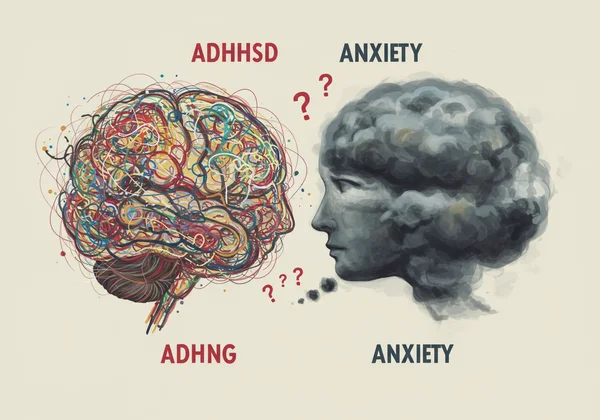
At first glance, the outward behaviors of ADHD and anxiety can look strikingly similar. Both can lead to restlessness, difficulty concentrating, and problems with task completion. However, the internal experiences and underlying reasons for these behaviors are often quite different. Understanding this "why" is key to distinguishing between them.
When Distraction Looks Like Worry: Core ADHD Traits
ADHD is a neurodevelopmental condition characterized by persistent patterns of inattention, hyperactivity, and impulsivity. The core challenge often stems from issues with executive functions—the brain's self-management system.
For someone with ADHD, distraction isn't always about being worried; it's about the brain constantly seeking stimulation. A quiet room can feel deafening, making it hard to focus on a single task. The mind might drift from a work project to a forgotten hobby, then to planning dinner, all within a few seconds. This isn't a choice but a function of how the ADHD brain regulates attention. Similarly, hyperactivity might manifest as physical restlessness or an internal feeling of being constantly "on the go," driven by an under-stimulated brain rather than fear.
The Buzz of Unease: Core Anxiety Traits
Anxiety, on the other hand, is primarily an emotional-response condition. Its defining feature is excessive and persistent worry, fear, or unease about future events or everyday situations. While this can also cause distraction, the source is different.
A person with anxiety might struggle to focus on a task because their mind is hijacked by "what if" scenarios. Their attention is consumed by ruminating on potential negative outcomes, replaying past mistakes, or feeling a sense of impending doom. The restlessness associated with anxiety is often a physical manifestation of this internal turmoil—fidgeting, a racing heart, or muscle tension are the body's response to a perceived threat, even when none is present.
Why Procrastination Isn't Always Just Laziness
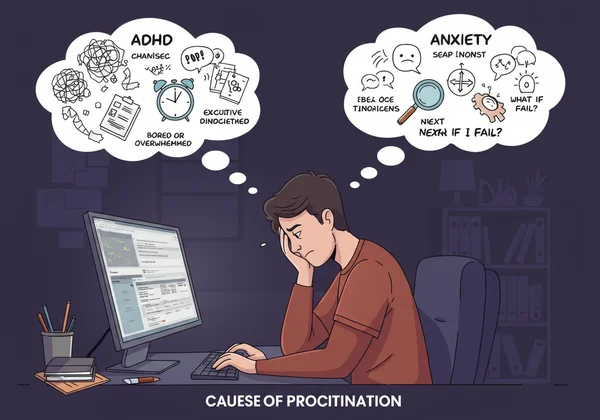
Let's look at a common overlapping behavior: procrastination. Both ADHD and anxiety can make starting and finishing tasks feel impossible, but for different reasons.
- ADHD-driven procrastination often comes from executive dysfunction. The task might seem boring, overwhelming, or the person doesn't know where to start. The brain struggles to activate and prioritize, leading to avoidance in favor of more stimulating activities until the pressure of a deadline provides the necessary adrenaline rush.
- Anxiety-driven procrastination is typically rooted in fear. This could be a fear of failure, a fear of not doing the task perfectly (perfectionism), or a fear of being judged for the outcome. The person avoids the task not because they're bored, but because the emotional weight of starting it is too great.
If you recognize these patterns in yourself, taking an ADHD assessment can provide a structured way to review your experiences.

The Complicated Dance: Why ADHD and Anxiety Often Co-Occur
To make matters even more complex, ADHD and anxiety frequently exist together. It's estimated that about half of all adults with ADHD also have an anxiety disorder. This comorbidity isn't a coincidence; the two conditions can directly influence and exacerbate one another, creating a challenging cycle.
The Cycle of Executive Dysfunction and Worry
Living with untreated ADHD can be inherently stressful. Constantly struggling with executive dysfunction—like forgetting appointments, missing deadlines, losing important items, and managing finances—creates real-world negative consequences. This ongoing struggle can logically lead to the development of anxiety.
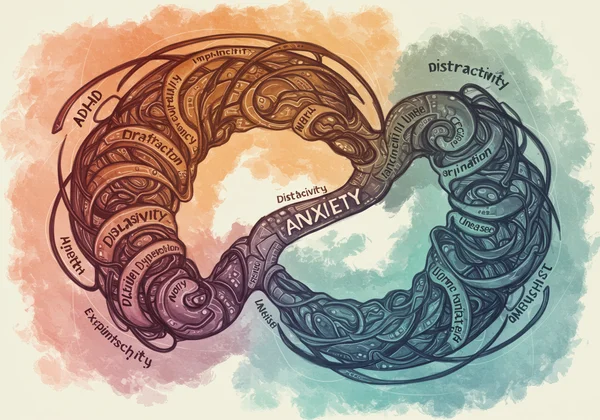
You might become anxious about your performance at work, your reliability in relationships, or your ability to manage daily life. In this way, anxiety becomes a coping mechanism, albeit a painful one. The worry is a direct result of the challenges posed by ADHD, creating a feedback loop where ADHD symptoms fuel anxiety, and the resulting anxiety makes it even harder to manage ADHD symptoms.
Understanding Rejection Sensitive Dysphoria (RSD) and Anxiety
A concept closely linked to ADHD is Rejection Sensitive Dysphoria (RSD). While not a formal diagnosis, RSD describes an extreme emotional sensitivity and pain triggered by the perception of being rejected, criticized, or failing. This isn't just feeling sad; it's an intense, overwhelming, and often unbearable emotional response.
Because of this heightened sensitivity, individuals with ADHD may live with a constant, low-grade fear of disappointing others. This can easily morph into social anxiety, causing them to avoid social situations or become people-pleasers to prevent any chance of perceived rejection. The internal monologue of someone with RSD is often filled with anxious thoughts, making it a powerful bridge between ADHD and anxiety. Exploring your traits with a free ADHD test for adults can be a helpful first step in understanding these patterns.
Why a Professional Evaluation is Your Best Path to Clarity
While self-reflection and online resources are valuable, they cannot replace a formal diagnosis from a qualified healthcare professional. Untangling ADHD and anxiety requires a nuanced and comprehensive approach to ensure you receive the right kind of support.
The Limitations of Self-Assessment Tools
Online screening tools, like our online ADHD screening tool, are designed to be an accessible and insightful first step. They can help you identify potential ADHD-related traits based on standardized questionnaires and provide a personalized report to organize your thoughts. Taking an ADHD test online can empower you with the language and data to start a meaningful conversation.
However, a self-assessment is not a diagnosis. These tools cannot distinguish the underlying cause of your symptoms, rule out other conditions, or account for the complexities of your personal history. Their purpose is to provide a starting point for further exploration, not a final answer.
What a Comprehensive Assessment Involves
A comprehensive assessment with a professional (like a psychiatrist, psychologist, or clinical social worker) goes much deeper. It typically includes:
- Detailed Interviews: Discussing your symptoms, personal history, and challenges from childhood to the present.
- Standardized Rating Scales: Using clinical tools to measure symptoms.
- Information from Others: Sometimes, input from a partner, parent, or close friend can provide additional perspective.
- Ruling Out Other Conditions: A professional will consider whether your symptoms could be better explained by anxiety, depression, trauma, or another medical condition.
This thorough process is the only way to get an accurate diagnosis and a treatment plan tailored specifically to you.
Your Next Steps Towards Clarity
Untangling the threads of ADHD and anxiety is a journey of self-discovery that begins with knowledge and awareness. Recognizing that these conditions can mimic, mask, or co-exist is an empowering realization. It frees you from the cycle of self-blame and opens the door to effective strategies and genuine support.
While the path to clarity can feel daunting, you don't have to navigate it alone. The most important step is the first one. By understanding the potential sources of your struggles, you can advocate for yourself and seek the right kind of help.
Ready to take that first step? Try our free tool today to gain initial insights into your traits. Use the personalized report as a valuable starting point for a conversation with a healthcare professional who can guide you the rest of the way.
Frequently Asked Questions About ADHD and Anxiety Overlap
Do I have ADHD or is it just anxiety?
The only way to know for sure is through a comprehensive evaluation by a qualified healthcare professional. While they have overlapping symptoms like inattention and restlessness, the root cause differs. ADHD-related inattention often comes from an under-stimulated brain seeking engagement, while anxiety-related inattention stems from a mind preoccupied with worry.
What are the common symptoms that overlap between ADHD and anxiety?
Common overlapping symptoms include difficulty concentrating, restlessness or an inability to relax, procrastination, trouble sleeping, and feeling easily overwhelmed. A key difference often lies in the "why" behind the behavior—is it driven by a need for stimulation and executive function challenges (ADHD), or by fear and worry (anxiety)?
Can an online ADHD test distinguish between ADHD and anxiety?
No, an online screening tool cannot diagnose or definitively distinguish between the two. An ADHD screening test is designed to identify patterns consistent with ADHD traits. However, it cannot rule out anxiety or other conditions. Its value is in providing a structured summary of your experiences that you can share with a doctor to facilitate a more accurate diagnosis.
What feels like ADHD but isn't, and how can I tell the difference?
Several conditions can mimic ADHD symptoms. Besides anxiety, these include depression (which can cause brain fog and low motivation), sleep deprivation, trauma (which impacts focus and emotional regulation), and even thyroid issues. A professional diagnosis is crucial to rule out these other possibilities and ensure you're treating the correct underlying issue.
What should I do after taking an online ADHD test if I suspect anxiety too?
If your results suggest potential ADHD traits and you also suspect you have anxiety, it's essential to discuss both possibilities with a healthcare provider. Share your report from the free online ADHD test and be specific about your worries and fears as well. A professional can assess for both conditions and help you create a treatment plan that addresses your unique needs.