ADHD Therapies: Options for Adults, Kids, and Teens
ADHD therapies can mean several different things: medication support, behavior therapy, parent training, cognitive behavioral therapy, coaching, school supports, and day-to-day skill building. The best mix depends on age, symptoms, goals, side effects, access, and whether other concerns such as anxiety, sleep problems, or learning differences are also present. This guide explains the main options in plain English so you can have a more useful conversation with a qualified clinician, therapist, school team, or family doctor. If you are an adult trying to understand your own focus, impulsivity, and daily challenges, an adult ADHD screening tool can be a gentle first reflection step before seeking formal care.

What Counts as ADHD Therapy?
In everyday search results, "ADHD therapy" may refer to anything that helps a person manage ADHD-related impairment. In clinical conversations, it is more useful to separate treatment into categories.
Medication is one category. Stimulant and non-stimulant medications may reduce core ADHD symptoms for many people, but they require medical supervision, dose monitoring, and discussion of benefits and side effects. Medication is not psychotherapy, and it is not the only route.
Behavioral and psychological therapies are another category. For children, that often means parent training in behavior management, classroom interventions, routines, reinforcement systems, and coaching adults on how to shape the environment. For adults, therapy often focuses less on "trying harder" and more on practical skills: planning, time awareness, emotion regulation, procrastination patterns, self-talk, and follow-through.
Educational supports are part of the picture too. A child or teen may need school-based accommodations, organizational skills training, or coordination between parents, teachers, and clinicians. Adults may need workplace strategies, reminders, task systems, coaching, or support for relationships.
The most helpful way to think about ADHD therapies is not as a single best product. Think of them as a toolbox. One person may need medication plus CBT. Another may need parent training and school supports. Someone else may begin with assessment, sleep, structure, and coaching while they explore whether medication is appropriate.
ADHD Treatment for Adults: What Usually Helps?
ADHD treatment for adults often combines education, medication when appropriate, skills training, and psychological counseling. The goal is not to change a person's personality. It is to reduce the friction that shows up in work, school, relationships, money, chores, emotional regulation, and self-esteem.
CBT therapy for ADHD is one of the most commonly discussed adult options. ADHD-focused CBT is different from general supportive talk therapy. It usually works on specific patterns such as underestimating time, avoiding tasks after small setbacks, losing track of priorities, or interpreting repeated difficulty as personal failure. A therapist may help the adult build a planning system, challenge harsh self-talk, practice problem-solving, and create realistic follow-through cues.
Coaching can also be useful, especially when the main struggle is translating good intentions into daily systems. Coaching is not a substitute for mental health care, but it may support calendars, routines, workspace setup, task breakdown, and accountability. Online ADHD therapy or coaching can help people who have limited local options, though it is still important to check credentials, privacy practices, and whether the provider has experience with adult ADHD.
Some adults benefit from couples therapy or family sessions when ADHD patterns affect communication, shared responsibilities, or conflict. The focus should be practical and non-blaming: how reminders are handled, how chores are divided, how emotional flooding is paused, and how both partners can talk about needs without turning every discussion into a character trial.
If you are not sure whether adult ADHD patterns fit your experience, reviewing a structured ADHD self-reflection resource may help you organize examples to bring to a professional appointment.

What Therapy Is Best for an ADHD Child?
For a child, the "best" therapy depends heavily on age. For preschool-age children, parent training in behavior management is often recommended before medication is considered. This does not mean the parent caused ADHD. It means young children respond strongly to changes in routines, attention, reinforcement, transitions, sleep structure, and adult responses.
Parent training teaches caregivers how to make expectations visible, reward desired behavior, reduce accidental reinforcement of disruptive behavior, and respond consistently. A good plan may include visual routines, short instructions, immediate feedback, predictable consequences, and protected positive attention. These tools sound simple, but consistency is the treatment ingredient.
For school-age children, ADHD treatment for kids often includes a combination of behavior therapy, parent training, classroom supports, and sometimes medication. School support may involve seating changes, assignment chunking, movement breaks, written directions, daily report cards, or organizational coaching. The child should not be expected to carry the whole plan alone.
Occupational therapy may help some children when motor planning, sensory regulation, handwriting, or daily living routines are major barriers. Speech and language therapy may be relevant if language processing, social communication, or learning concerns are present. These are not universal ADHD therapies, but they can be part of a broader care plan when the child's profile calls for them.
The most useful question is not only "what therapy is best for ADHD child?" A better question is: which setting is causing the most impairment right now, and which adult-controlled supports can reduce that load?
ADHD Treatment for Teens
ADHD treatment for teens has a special challenge: adolescents need support, but they also need growing ownership. A plan that worked at age eight may fail at age fifteen because homework, phones, driving, friendships, sleep schedules, emotional stakes, and independence all change.
Teens may benefit from medication review, school accommodations, behavioral therapy, CBT-informed skills, organizational coaching, and family sessions. Therapy can help a teen notice patterns before they become crises: missing assignments, all-night catch-up cycles, impulsive texting, emotional escalation, or giving up after one bad grade.
Parents still matter, but the role often shifts from constant management to collaborative scaffolding. Instead of asking "Why didn't you remember?", families can build shared systems: a weekly planning meeting, a visible school portal review, phone-free sleep routines, and a plan for asking teachers for clarification before deadlines pass.
Calming activities for ADHD teens should be concrete and body-friendly. Examples include walking, stretching, music without multitasking, drawing, breathing exercises, martial arts, swimming, or a short reset routine before homework. The aim is not to erase energy. It is to help the nervous system shift gears.
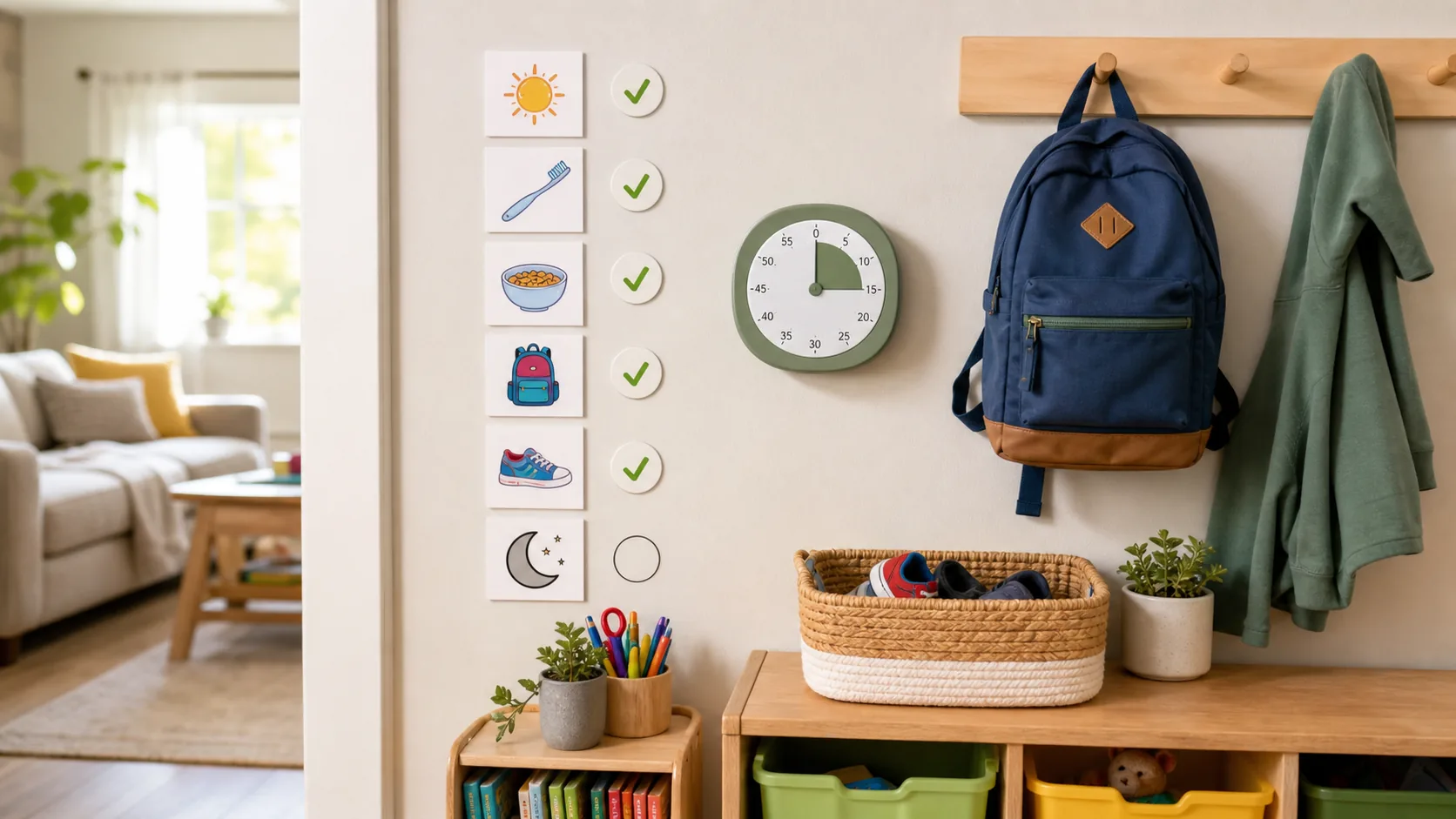
Non Medication Treatment for ADHD Child at Home
Non medication treatment for ADHD child at home usually means changing the environment so the child has fewer invisible demands. Home support is not a replacement for medical or mental health care, but it can make daily life less chaotic.
Start with routines that are short enough to survive real mornings. A visual checklist for "get dressed, eat, brush teeth, backpack" is better than repeated verbal reminders. Use one instruction at a time, ask the child to repeat it back, and praise the first step quickly. ADHD brains often struggle less with willingness than with activation, sequencing, and time sense.
Build transitions with warnings and anchors. A five-minute timer, a song, or a first-then statement can reduce the shock of switching tasks. For homework, use short work sprints, movement breaks, and a defined landing place for papers. For bedtime, protect the same sequence each night as much as possible.
Rewards should be immediate, specific, and tied to behaviors the child can actually control. "Great job starting your worksheet when the timer rang" is more useful than a vague "be good." Consequences should be predictable and brief, not emotional lectures that arrive after everyone is already overwhelmed.
Also watch the basics: sleep, meals, physical activity, screen transitions, and sensory overload. These do not replace ADHD therapies, but they can change how hard every other intervention has to work.

Alternative, Creative, and Emerging ADHD Therapies
Searches for ADHD music therapy, art therapy, nature therapy, light therapy, sound therapy, neurofeedback, TMS, ketamine therapy, and holistic therapy show how many people want options beyond standard care. Some supportive activities may help with mood, stress, motivation, or self-expression. That does not make every option an evidence-based ADHD treatment.
Creative therapies such as art or music therapy may be valuable when they are delivered by trained professionals and matched to a person's goals. Nature time, exercise, mindfulness, and structured movement can support regulation and health. They may fit well beside treatment, especially when they make routines more sustainable.
Other options require extra caution. Neurofeedback has mixed evidence and quality can vary. Light or sound-based approaches may be marketed with stronger claims than the research supports. TMS and ketamine are medical interventions used for other conditions in some settings and should not be treated as casual ADHD fixes. Supplements and over-the-counter products can interact with medication or create false confidence.
A practical rule: if a therapy promises fast certainty, universal results, or a simple answer for every ADHD profile, slow down. Ask what outcome it targets, what evidence supports it, who provides it, what risks exist, what it costs, and how progress will be measured.
How to Choose the Right ADHD Therapies for Your Situation
Choosing among ADHD therapies starts with mapping the problem. Write down where ADHD-like difficulties show up: work deadlines, school assignments, mornings, driving, relationships, emotional outbursts, spending, sleep, or household tasks. Then note which supports have already helped, even a little.
Adults can bring examples to a primary care clinician, psychologist, psychiatrist, therapist, or ADHD-informed coach. Parents can bring school notes, behavior patterns, sleep information, and examples of what happens before and after difficult moments. Teens should be included in the conversation because a plan they experience as punishment will rarely hold.
Ask clear questions: Which symptoms are we targeting first? Is medication worth discussing? Would CBT, behavior therapy, parent training, school support, coaching, or family work fit this stage? How will we know if the plan is helping? What side effects, costs, or access issues should we plan for?
If you are early in the process, reflecting on adult ADHD patterns can help you sort observations before that conversation. A screening result is not a formal evaluation, but it can make your next step more organized.

Using Screening as a First Step Before Care
ADHD therapies work best when they are matched to a person's real-life patterns. That matching usually starts with noticing what is happening clearly: attention lapses, impulsive choices, restlessness, emotional reactivity, unfinished tasks, or daily systems that keep collapsing despite effort.
For adults, an online screening can be a low-pressure way to organize those observations. ADHDTest.me is designed as an educational adult screening and reflection resource based on ASRS v1.1, with immediate results and optional deeper explanation. It cannot replace a qualified professional's evaluation, and it should not be used as a final label. Its value is helping you move from a vague "something feels hard" to examples you can discuss.
If the patterns seem familiar, consider using the free adult ADHD screener as one piece of preparation, then bring your questions to an appropriate professional. The next step does not have to be dramatic. It can simply be a clearer conversation about support.
FAQ
What are the top 3 treatments for ADHD?
The top three categories commonly discussed are medication, behavioral or psychological therapy, and educational or skills-based supports. For adults, this may mean medication, CBT, coaching, and practical systems. For children, it may mean parent training, classroom interventions, and medication when appropriate. The best plan depends on age, impairment, health history, access, and goals.
What is the most effective treatment for ADHD?
There is no single most effective treatment for every person. Many adults do best with a combination of medication, education, skills training, and counseling. Many children need age-specific behavior therapy, family support, school interventions, and sometimes medication. A clinician can help weigh benefits, side effects, and priorities.
What kind of therapy is best for ADHD adults?
CBT adapted for adult ADHD is often a strong option because it targets planning, procrastination, emotional patterns, and self-management. Coaching, couples therapy, and skills training may also help depending on the person's needs. General talk therapy can be supportive, but ADHD-focused structure is often important.
What therapy is best for an ADHD child?
For young children, parent training in behavior management is often recommended as an early option. For school-age children, behavior therapy, parent training, classroom supports, organizational skills training, and medical care may be combined. The best therapy is the one matched to the child's age, setting, and main difficulties.
How can you treat an ADHD child at home without medication?
Home support can include visual routines, clear one-step instructions, immediate praise, predictable consequences, movement breaks, timer-based transitions, organized homework spaces, and consistent sleep routines. These strategies are not a substitute for professional care, but they can reduce daily friction and support a broader plan.
What are calming activities for ADHD?
Helpful calming activities often involve the body: walking, stretching, swimming, yoga, breathing exercises, music, drawing, building, or quiet sensory routines. The best activity is one the person will actually use before overwhelm peaks. For children, calming tools work best when adults model and practice them during calm moments first.
What is the 1/3/5 rule for ADHD?
The 1/3/5 rule is a productivity idea, not a formal medical rule. People use it to reduce overwhelm by choosing one big task, three medium tasks, and five small tasks for a day. For ADHD, it can help because it limits the list, makes priorities visible, and reduces the urge to treat every task as equally urgent.