ADHD Time Management: 8 Science-Backed Strategies for Better Focus
Do you ever feel like you're constantly running late, no matter how hard you try? Does your to-do list feel like a mountain you can never climb? For many people with ADHD, the daily battle with time can be exhausting. It’s not about being lazy or disorganized; it's about having a brain that experiences time differently. If this sounds familiar, you're in the right place.
Understanding how your brain works is the first step toward finding effective strategies. A simple online ADHD test can offer initial insights into your traits, helping you connect the dots between your daily struggles and potential ADHD symptoms. This article will guide you through eight science-backed time management strategies designed specifically for the ADHD brain, helping you turn frustration into progress.
Why ADHD Brains Struggle with Time Management
Before diving into solutions, it’s crucial to understand the "why." Time management difficulties in ADHD are not a character flaw. They are rooted in neuroscience and the unique wiring of the ADHD brain. Recognizing this is the foundation for self-compassion and finding strategies that truly work.
The Science Behind Time Blindness
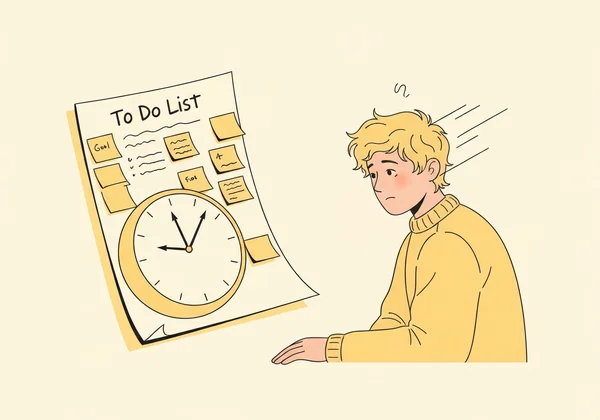
"Time blindness" is a common experience for individuals with ADHD. It's the persistent difficulty in sensing the passage of time, estimating how long a task will take, and feeling a sense of urgency for future deadlines. Your brain's internal clock may not function as reliably as a neurotypical person's.
This happens because the parts of the brain responsible for executive functions, including time perception, work differently in people with ADHD. People with ADHD often experience time in two modes: 'now' and 'not now.' A task due in an hour might feel just as distant as one due next month. This makes starting tasks difficult until the last minute.

Executive Function's Role in Time Management
Executive functions are the high-level mental skills you use to organize your life and achieve goals. These include planning, prioritizing, starting tasks, and self-monitoring. ADHD directly impacts these functions, making traditional time management advice often feel useless.
For example, a simple instruction like "just make a schedule" can be overwhelming. The ADHD brain often struggles with three key executive functions: breaking down large projects into smaller steps, determining priorities, and transitioning smoothly between tasks. This is why ADHD-friendly strategies must account for these underlying challenges, not just treat the surface-level symptoms.
Foundational Strategies for Time Awareness
Building a better relationship with time starts with making it visible and tangible. Since the internal clock can be unreliable, we need to create a system of external cues. These strategies are designed to help you "see" time in a way that your brain can process more easily.
External Time Cues That Work for ADHD Brains
Making time a physical presence in your environment is a game-changer. Instead of relying on a digital clock in the corner of your screen, try using visual and auditory timers.
- Visual Timers: Tools like the Time Timer, which shows a colored disc that shrinks as time passes, make the concept of "time remaining" concrete. You can literally see time disappearing.
- Analog Clocks: Place analog clocks in every room. The physical movement of the hands provides a constant, subtle reminder of time's flow.
- Auditory Cues: Set alarms not just for when you need to stop, but also for transition points. For instance, set an alarm for 15 minutes before you need to leave the house to signal that it's time to start getting ready.
Time Estimation Training Exercises
A key part of time blindness is the inability to accurately guess how long tasks will take. You can train this skill with a simple exercise. Before starting any task—whether it's writing an email or doing the dishes—write down your estimate of how long it will take.
When you finish, write down the actual time it took. Don't judge yourself for being wrong; the goal is simply to gather data. Over time, you'll start to notice patterns. Maybe you consistently underestimate tasks by 50%, or perhaps short tasks are easy to predict but longer ones are not. This awareness helps you make more realistic plans in the future.
ADHD-Adapted Time Blocking Systems
Time blocking is a popular productivity method where you schedule every part of your day. For the ADHD brain, a rigid, back-to-back schedule can be a recipe for failure. The key is to adapt the system to be flexible and forgiving.
Customizable Time Blocking Templates
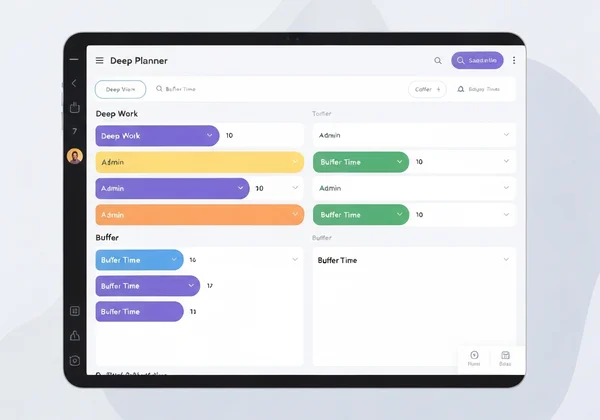
Instead of scheduling every minute, create "blocks" for different types of activities. For example, you could have a two-hour "Deep Work" block in the morning, a one-hour "Admin Tasks" block after lunch, and a 30-minute "Catch-Up" block at the end of the day.
Use colors to categorize your blocks: blue for work, green for personal appointments, orange for chores. This visual system makes your schedule easier to process at a glance. Most importantly, leave empty spaces in your schedule. These gaps are not for laziness; they are for flexibility and rest.
The Power of Buffer Time
One of the biggest mistakes people with ADHD make is creating schedules without "buffer time." We often plan for the best-case scenario, forgetting that transitions, interruptions, and moments of distraction are inevitable.
A simple rule is to add a 25% buffer to every task. If you think a project will take an hour, schedule 75 minutes for it. If you need to drive somewhere that's 20 minutes away, give yourself 25-30 minutes. This buffer acts as a safety net, reducing the stress and panic that come from running behind schedule. It’s a practical act of self-kindness.
Prioritization Frameworks for ADHD Decision-Making
When everything feels equally urgent, decision paralysis can set in. You become overwhelmed by choices and struggle to take any action at all. Simple frameworks can help you cut through the noise and decide what to do next.
The Eisenhower Matrix for ADHD Brains
The Eisenhower Matrix is a classic tool that divides tasks into four quadrants:
- Urgent & Important: Do it now.
- Not Urgent & Important: Schedule it.
- Urgent & Not Important: Delegate it.
- Not Urgent & Not Important: Delete it.
For the ADHD brain, the challenge is often distinguishing "urgent" from "important." We tend to focus on what's urgent (e.g., a notification that just popped up) instead of what's truly important (e.g., working on a long-term goal). Using this matrix forces you to pause and consciously categorize your tasks, giving you a clearer path forward.
The 2-Minute Rule and Other Quick Wins
The 2-Minute Rule, popularized by David Allen, is simple: if a task takes less than two minutes to complete, do it immediately. This rule is incredibly effective for ADHD because it bypasses the executive function challenges of planning and prioritizing.
Responding to a quick email, putting a dish in the dishwasher, or taking out the trash no longer needs to be added to a to-do list. You just do it. Completing these small tasks creates momentum and a sense of accomplishment, which can provide the dopamine boost needed to tackle larger projects.
Technology Tools to Support ADHD Productivity
The right technology can act as an external executive function system, supporting your brain where it needs it most. The goal is not to download dozens of apps but to find one or two simple tools that solve a specific problem for you.
Timer Apps That Combat Time Blindness
Pomodoro timers are fantastic for ADHD. This technique involves working in focused 25-minute intervals, separated by short 5-minute breaks. The timer creates a clear structure and a sense of urgency, while the built-in breaks help prevent burnout and maintain focus.
Look for timer apps that are simple and visual. Some apps allow you to block distracting websites during your focus sessions, adding an extra layer of support. This structured approach helps make large tasks feel more manageable.
Calendar Systems That Stick
For a calendar system to be effective for someone with ADHD, it needs to be simple, centralized, and accessible. The best system is the one you will actually use consistently. For most people, a digital calendar like Google Calendar or Apple Calendar is ideal.
The key is to put everything on the calendar—not just appointments, but also work blocks, reminders to take breaks, and even travel time. Use the notification features to give yourself multiple reminders before an event. This externalizes your memory and planning, freeing up mental energy for other things.
Your Next Steps Toward ADHD-Friendly Time Management
When you have ADHD, managing time isn't about working harder—it's about working smarter with strategies that fit your unique brain. By understanding the science behind your challenges and implementing strategies designed for your unique brain wiring, you can regain a sense of control and reduce daily stress. Start by making time visible, building in buffers, and using simple rules to make decisions easier.
Recognizing that your struggles with time management might be linked to underlying ADHD traits is a powerful first step. If you're wondering whether your challenges with focus, procrastination, and time blindness are part of a bigger picture, knowledge is power. Take the next step in your journey of self-discovery. You can start your test now to receive a free, confidential, AI-powered report that offers personalized insights into your traits.
Common Time Management Questions for ADHD
Can an ADHD test help with my time management struggles?
Yes, it can be a very helpful first step. While an online test is not a diagnosis, it can highlight patterns related to inattention, hyperactivity, and impulsivity that directly impact time management. Understanding these potential traits through a personalized report from an ADHD screening test can help you choose the right strategies for your specific challenges.
What's the best time management technique for adults with ADHD?
There is no single "best" technique; it's about finding what works for you. However, many adults with ADHD find success with a combination of the Pomodoro Technique (for focus), time blocking (for structure), and the 2-Minute Rule (for overcoming inertia). The key is to be flexible and adapt these methods to your needs.
Why do I struggle with time management despite knowing what to do?
This is a classic ADHD paradox. It's the gap between knowing and doing. This struggle is often due to challenges with executive functions like task initiation, emotional regulation, and sustained focus. You might know you should start a task, but your brain has difficulty activating to actually do it. This isn't a moral failing; it's a neurological reality.
How does ADHD affect productivity at work?
ADHD can significantly impact workplace productivity. Common challenges include missing deadlines due to time blindness, difficulty prioritizing tasks, struggling to stay focused in an open office, and procrastination on boring or overwhelming projects. However, many people with ADHD also have strengths, such as creativity, problem-solving, and the ability to hyperfocus on interesting work.
Can time management strategies really make a difference for ADHD?
Absolutely. But it requires using the right strategies. Generic advice often fails because it doesn't account for the executive function challenges of ADHD. When you use ADHD-friendly strategies—like external timers, buffer time, and simple prioritization rules—you are creating an external support system for your brain. This can lead to significant improvements in productivity, confidence, and overall well-being.