Causes of ADHD Explained by Research, Brain Science, and Life Stage
The causes of ADHD are often described too simply: bad habits, too much screen time, weak discipline, or one chemical in the brain. Current research points to a more careful answer. ADHD is a neurodevelopmental condition shaped by genes, brain development, early-life factors, and the demands placed on a person over time. It can look different in children, teens, adults, and women, which is why a thoughtful explanation matters. If you are trying to connect research with your own attention, impulse control, and daily challenges, an adult ADHD screening overview can be a useful educational starting point before any professional conversation.
ADHD Does Not Have One Simple Cause
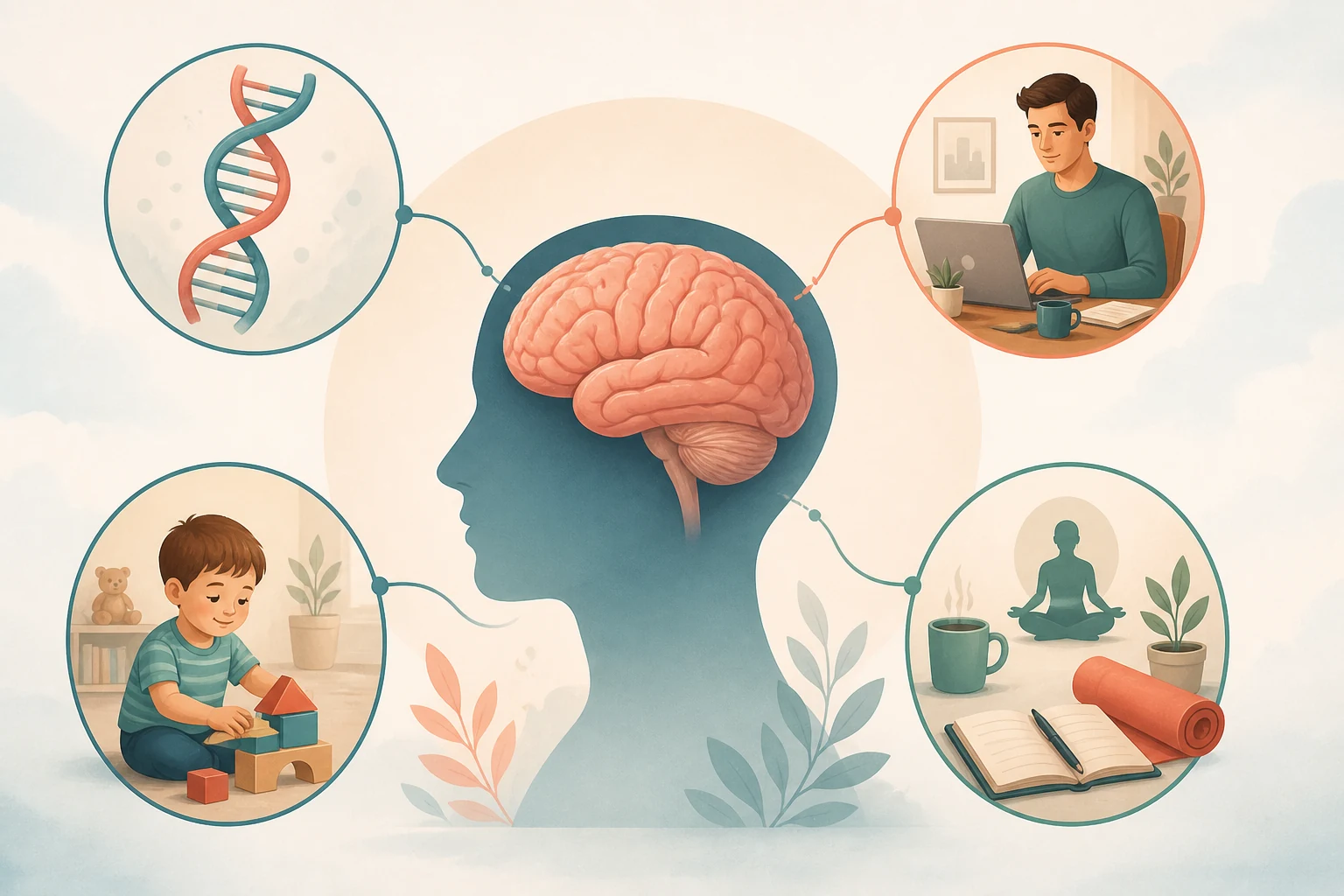
ADHD is best understood as a condition with many contributing influences rather than one clear origin. A person may inherit a higher likelihood of ADHD traits, develop brain-network differences early in life, and then notice symptoms more or less depending on school, work, sleep, stress, support, and expectations.
That does not mean ADHD is caused by laziness or a lack of effort. It also does not mean one parent, one food, one app, or one classroom experience explains everything. A risk factor increases likelihood; it is not a direct, certain cause. Many people with a risk factor do not have ADHD, and many people with ADHD cannot point to a single obvious exposure or event.
What Causes ADHD in the Brain?
When people ask what causes ADHD in the brain, they are usually asking why attention, motivation, activity level, and impulse control can feel inconsistent. Research commonly points to differences in brain development and communication, especially in networks involved in executive function.
Executive function includes planning, working memory, prioritizing, emotional regulation, task initiation, and the ability to pause before acting. Brain regions often discussed in ADHD research include the prefrontal cortex, which helps with planning and inhibition, and deeper brain systems involved in reward, movement, and habit formation. These systems do not work alone; ADHD is more about network regulation than one "broken" area.
Dopamine and norepinephrine are often mentioned because they help the brain manage attention, alertness, reward, and motivation. Still, ADHD should not be reduced to a simple dopamine shortage. The research picture is more nuanced: signaling, timing, receptor activity, and network coordination may all matter.
This brain-based view can reduce shame. Someone with ADHD may be able to focus intensely on urgent, novel, or rewarding tasks while struggling with slow paperwork, routine chores, or long-term planning. That pattern is not a character flaw. If you are comparing brain-based explanations with everyday patterns, a free ASRS-based ADHD self-check can help organize observations for later discussion with a qualified professional.

Genetic and Family Factors
Genetics are one of the strongest known influences in ADHD research. ADHD tends to run in families, and studies of twins and families suggest that inherited traits play a large role. This does not mean there is a single ADHD gene. Instead, many genetic variations may each contribute a small amount of risk.
That polygenic pattern helps explain why ADHD can appear differently across relatives. One person may be visibly hyperactive as a child. Another may seem quiet and inattentive, then struggle later with deadlines, bills, or household organization. A parent may recognize their own lifelong patterns only after a child is evaluated.
Genes also interact with development and environment. A person can carry ADHD-related susceptibility without having severe impairment, while another person with similar family history may face more difficulty because of sleep disruption, anxiety, school demands, work complexity, or limited support.
Prenatal and Early Childhood Risk Factors
Research also examines prenatal and early childhood factors that may influence ADHD risk. Commonly discussed factors include premature birth, low birth weight, prenatal exposure to alcohol or tobacco, exposure to environmental toxins such as lead, certain pregnancy or birth complications, and early childhood health events such as head injury.
These associations need careful wording. They are not proof that one exposure caused ADHD in one individual. ADHD usually develops through overlapping biological and developmental influences. For parents, this matters: the purpose of risk-factor research is better prevention, support, and early recognition, not blame.
It is also useful to separate risk from symptom intensity. A child with ADHD may have more visible difficulties in a noisy classroom, during transitions, or when instructions are vague. A calmer routine can reduce friction, but it does not erase the underlying neurodevelopmental pattern.
Causes of ADHD in Children and Teens
The causes of ADHD in children are usually tied to early brain development, genetic susceptibility, and possible early-life risk factors. Symptoms often become noticeable when a child's environment starts requiring longer attention, impulse control, waiting, organization, and sustained effort.
In children, hyperactivity may be more visible: climbing, fidgeting, interrupting, leaving a seat, or acting before thinking. Inattentive symptoms may look like losing materials, drifting off during instructions, forgetting tasks, or needing repeated reminders. These patterns can be mistaken for defiance when the core issue is self-regulation.
In teens, ADHD can become more complex. The teen years bring heavier homework loads, shifting schedules, phones, social pressure, emotional intensity, sleep changes, and more independence. A teen who managed in earlier grades may struggle when planning and time management become less externally supported. Causes of ADHD in teens are not usually new causes; they are often longstanding vulnerabilities becoming more visible under greater demands.

What Causes ADHD in Adults?
What causes ADHD in adults is often misunderstood. ADHD is considered developmental, so adult ADHD usually reflects traits that began earlier in life but were missed, masked, or not impairing enough to raise concern at the time. Adulthood can make those traits harder to compensate for.
Adult responsibilities demand self-directed planning: managing work, relationships, childcare, finances, health appointments, email, and long-term goals. A person who once did well with external structure may feel overwhelmed when they must create that structure alone. This is one reason adults often search for causes after years of wondering why ordinary routines feel unusually difficult.
Stress, poor sleep, burnout, anxiety, depression, substance use, and medical issues can also create ADHD-like symptoms or intensify existing ADHD symptoms. They are better thought of as triggers, amplifiers, or overlapping explanations rather than simple causes. A careful professional evaluation can help separate lifelong patterns from problems that appeared mainly after a major stressor, sleep disruption, or mood change.
Causes of ADHD in Women
The biological causes of ADHD in women are not fundamentally separate from ADHD in men, but recognition can be different. Girls and women are more likely to have symptoms that are less disruptive to others, especially inattentive symptoms, internal restlessness, emotional overwhelm, disorganization, or perfectionistic overcompensation.
This can delay recognition. A girl may be described as dreamy or sensitive rather than hyperactive. A high-achieving student may spend twice as long completing work, hiding the struggle behind good grades. An adult woman may first notice the pattern during college, demanding work, parenting, perimenopause, or another transition that reduces her ability to compensate.
Hormonal changes may influence symptom intensity for some women, but hormones should not be framed as the sole cause of ADHD. A better explanation is that ADHD-related vulnerabilities can become more noticeable when biological changes, sleep, emotional load, and life demands shift at the same time.
Causes of ADHD and Treatment Decisions
Understanding causes of ADHD and treatment is useful because it points away from blame and toward practical support. If ADHD involves brain-based self-regulation differences, then support should reduce unnecessary executive-function load and strengthen routines around the person.
Treatment plans may include education, behavioral strategies, coaching, school or workplace accommodations, therapy for related emotional concerns, parent training for children, medication when appropriate, sleep support, and help for co-occurring conditions. The right plan depends on age, symptom pattern, impairment, medical history, preferences, and access to care.
Cause research also explains why willpower-only advice is rarely enough. A person may need visible reminders, shorter task blocks, body doubling, external deadlines, reduced clutter, movement breaks, and a realistic sleep routine. These supports do not prove weakness. They match the kind of self-regulation challenge ADHD can create.
Supplements are a common question, but they should be approached carefully. Some people have nutritional deficiencies or health needs that deserve professional guidance. However, supplements are not a universal explanation for ADHD, and they should not replace evidence-informed care.
Myths About What Causes ADHD
Several common myths continue to create stigma. Parenting style does not create ADHD, although parenting strategies can influence how smoothly daily routines go. Sugar is not considered a primary cause of ADHD, even though nutrition and regular meals can affect energy and mood. Screen time has not been shown to independently create ADHD, though heavy use can interfere with sleep, movement, schoolwork, and emotional regulation.
Another myth is that ADHD is only hyperactivity. Some people are restless and impulsive; others are quiet, forgetful, and mentally scattered. ADHD types and presentations can change how symptoms are noticed, but they do not point to completely different causes.
Using ADHD Cause Research for Next Steps
The most helpful way to use ADHD cause research is to reduce shame, clarify patterns, and decide what information to gather next. Write down when attention problems began, where they show up, what makes them worse, what helps, and whether family members report similar traits. Note sleep, stress, mood, substance use, medical issues, and major life changes, because these can shape how symptoms appear.
If the pattern has been present for years and affects work, school, relationships, finances, driving, or home routines, consider discussing it with a qualified professional. An online screener cannot replace a full evaluation, but a structured ADHD self-reflection tool can help you put vague concerns into clearer language.
The causes of ADHD are complex, but the next step does not have to be. Start with careful observation, use screening information as education, and seek professional guidance when symptoms cause meaningful impairment or when another condition might explain the same struggles.

FAQ
What is the main cause of ADHD?
There is no single main cause that explains every case. Genetics are among the strongest known influences, but ADHD is usually shaped by a combination of inherited susceptibility, brain development, early-life factors, and the environment a person must function in.
What causes ADHD in the brain?
ADHD is linked with differences in brain networks that support executive function, reward, motivation, attention, and impulse control. Dopamine and norepinephrine systems are often involved, but ADHD is not simply a one-chemical problem.
Can children grow out of ADHD?
Some children have fewer visible symptoms as they mature, especially hyperactivity. Others continue to experience attention, organization, emotional regulation, or impulsivity challenges into adulthood. Support needs can change with age.
Will ADHD improve with age?
ADHD may change with age rather than simply disappear. Adults often become less outwardly hyperactive but may still struggle with planning, time management, forgetfulness, or task completion, especially during demanding life stages.
What triggers ADHD people?
Common triggers include poor sleep, chronic stress, unclear instructions, frequent interruptions, cluttered environments, long tasks with delayed rewards, emotional conflict, and sudden schedule changes. These triggers can intensify symptoms, but they are not the root cause of ADHD.
What are the best supplements for ADHD?
There is no single best supplement for everyone with ADHD. If nutrition, iron, omega-3 intake, or another health issue is a concern, discuss it with a qualified clinician. Supplements should be considered cautiously and should not replace a broader care plan.
What causes ADHD in adults?
Adult ADHD usually reflects developmental traits that began earlier but became more noticeable later. Work demands, parenting, reduced structure, stress, sleep problems, and co-occurring mental health concerns can make longstanding ADHD patterns harder to manage.