Child ADHD Test Results: Your Parent's Guide to School & Doctors
Navigating the possibility of a child ADHD diagnosis can feel like charting unknown territory. You’ve taken a proactive first step by using an online screening tool, and now you’re holding a report filled with information. But what should you do after taking an online ADHD test? This guide empowers you, as a concerned parent, to transform that uncertainty into confident action. We will walk you through how to interpret your child’s screening results and provide a clear roadmap for discussing them with schools and doctors, ensuring your child gets the support they deserve. Understanding is the first step, and you've already started this important journey.
Understanding Your Child's ADHD Screening Results
Receiving the results from an online ADHD test is a pivotal moment. It’s not a conclusion, but a starting point—a valuable collection of insights that can illuminate your child's unique challenges and strengths. Consider it the first crucial clue in this journey you're taking together. This information, when viewed correctly, can be an incredibly powerful tool for advocacy.
What an Online Screening Can Tell You (and What It Can't)
It is essential to understand the purpose of this online ADHD screening tool. An online screening is an educational and supportive first step. It is expertly designed based on recognized diagnostic criteria to identify patterns of behavior related to inattention, hyperactivity, and impulsivity. This preliminary ADHD assessment provides a structured overview of potential ADHD traits your child may be exhibiting.
However, an online screening is not a clinical diagnosis. A formal diagnosis can only be made by a qualified healthcare professional, such as a pediatrician, psychologist, or psychiatrist, after a comprehensive evaluation. The screening tool is your ally in gathering preliminary data and deciding if pursuing that professional evaluation is the right next step. It helps you organize your observations into a clear, understandable format, which is invaluable when you later speak with experts. If you haven't yet, you can get your report to begin this process.

Interpreting the Report: Key Insights for Parents
The AI-powered report from our platform offers more than just a score; it provides personalized insights into your child's specific patterns. When reviewing the results, focus on the details. Does the report highlight significant challenges with focus during homework? Does it point to impulsivity in social situations? These details are the core of child behavior patterns that you can observe in daily life.
Use the report as a guide for your own observations. Over the next week, keep a simple journal noting instances that align with the report's findings. For example, note when your child struggles to wait their turn or has difficulty following multi-step instructions. This documented evidence, combined with your online screening results, creates a powerful and comprehensive picture to share with professionals.
Preparing for a Doctor's Visit About Child ADHD
Armed with your screening report and personal observations, your next step is talking to a doctor about ADHD. This conversation can feel daunting, but preparation is key to making it productive and stress-free. Your goal is to present a clear, evidence-based case for a professional evaluation, and you already have the tools to do so.
Gathering Essential Information and Documents
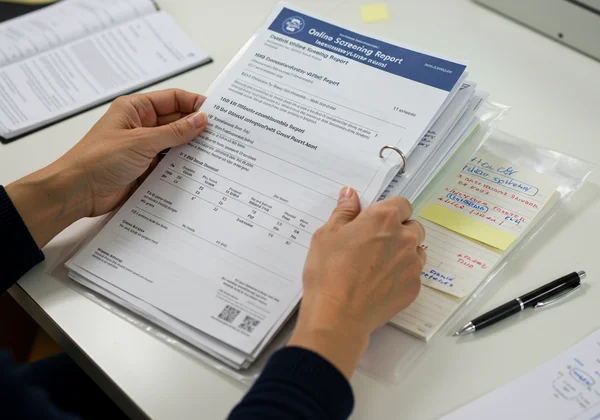
Before your appointment, compile a folder with all relevant information. A well-organized file will help you communicate effectively and ensure the doctor has a complete picture of your child's situation. Being prepared shows your commitment and can make the evaluation process smoother.
Your folder should include:
-
The Online Screening Report: Print out the results from the ADHD self assessment. It provides a structured summary of your concerns.
-
Your Observation Journal: Include your written notes on your child’s behavior, with specific examples.
-
School Feedback: Collect any report cards, teacher notes, or emails that mention challenges with attention, behavior, or academic performance.
-
An ADHD Symptoms Checklist: Note specific examples for each symptom you’ve observed.
-
Medical and Developmental History: Be prepared to discuss your child's milestones, any past medical issues, and family history.
What to Expect During an ADHD Evaluation
Understanding the ADHD assessment process for a child can significantly ease your anxiety. A formal evaluation is thorough and multi-faceted. The doctor will likely conduct a detailed interview with you and your child, asking about symptoms, their duration, and their impact across different settings like home and school.
They may use standardized rating scales, which will be completed by you, your child’s teachers, and sometimes your child. In some cases, a continuous performance test (CPT) or other psychological tests might be administered to measure attention and executive function. The goal is to rule out other potential causes for the symptoms, such as learning disabilities, anxiety, or hearing problems, and to confirm that the behaviors meet the criteria for an ADHD diagnosis.
Collaborating with School for ADHD Support
For a child with ADHD, school can be the most challenging environment. This is why establishing a strong partnership with your child's teachers and school administrators is non-negotiable for their success. Effective ADHD school support can make the difference between a child who struggles and one who thrives.
Communicating Effectively with Teachers and School Staff
Initiate a conversation with your child’s teacher with a collaborative mindset. Schedule a meeting to specifically discuss your concerns. Bring your file of information, including the screening report and your notes. Frame the conversation around teamwork: "I've noticed some challenges with focus at home, and I'm wondering what you're seeing in the classroom. I want to work together to help my child succeed."
Listen to the teacher’s perspective, as they see your child in a structured learning environment. This parent-teacher conference for ADHD is a fact-finding mission for both of you. By working together, you can develop consistent strategies that support your child both at home and in the classroom.

Understanding Educational Accommodations (504 Plan & IEP)
If your child receives a formal ADHD diagnosis that is found to impact their ability to learn, they may be eligible for legal protections and accommodations at school. The two primary mechanisms for this in the United States are the 504 Plan and the Individualized Education Program (IEP).
An ADHD 504 plan is designed to ensure a student with a disability has access to the general education curriculum. Accommodations might include preferential seating (e.g., at the front of the class), extended time on tests, or receiving copies of the teacher's notes.
An IEP for an ADHD child is part of special education and is for students whose disability significantly impairs their academic performance. It includes specialized instruction and related services in addition to accommodations. Understanding these options will empower you to advocate effectively for the precise level of support your child needs to flourish academically and socially.

Your Child's Journey: Empowering Steps Forward
Understanding your child's online ADHD screening results is the first step on a path toward empowerment. By using this information to have informed conversations with doctors and educators, you become your child's most effective advocate. This journey is not about labeling your child but about understanding their unique brain wiring so you can provide the tools and environment they need to succeed.
Every step you take, from documenting behaviors to discussing a 504 plan, makes a profound difference. You are building a support system that will allow your child's strengths to shine. Are you ready to take that first, crucial step toward clarity? Start the test on our homepage today.
Frequently Asked Questions for Parents About Child ADHD
How accurate is an online ADHD screening for my child?
An online ADHD screening is a highly reliable first step for identifying potential ADHD traits. Our tool is based on established scientific standards used in preliminary assessments. While it is not a formal diagnosis, its accuracy in flagging key symptoms provides a strong, evidence-based foundation for a more detailed conversation with a healthcare provider.
What are the key signs of ADHD in school-aged children?
Key signs often fall into three categories. Inattention may look like difficulty sustaining focus in class, disorganization, and frequently losing things. Hyperactivity can manifest as constant fidgeting, an inability to stay seated, and excessive talking. Impulsivity might be seen as blurting out answers, difficulty waiting for a turn, and interrupting others. A comprehensive online screening can help you assess these signs systematically.
Should I tell my child's school about the online ADHD screening results?
Sharing the screening results can be a constructive way to open a dialogue with your child's teacher. Present it as a tool you used to better understand your child's behavior, not as a diagnosis. This can help the teacher become a valuable partner in observing your child's classroom behavior, providing additional information you can take to a doctor.
What's the difference between a 504 Plan and an IEP for ADHD?
The main difference lies in the level of support. A 504 Plan provides accommodations within the general education classroom to ensure learning access (e.g., extra time on tests). An IEP is part of a special education program and provides specialized instruction and services for students whose disability significantly impacts their academic performance. A formal evaluation will determine which, if any, is appropriate for your child.