What Causes ADHD? Genetics, Brain Differences, and Risk Factors Explained
If you are searching "what causes ADHD," you are probably trying to make sense of a pattern, not just a label: distraction that feels bigger than ordinary busyness, impulsive decisions you regret later, or lifelong trouble organizing time and tasks. The short answer is that ADHD is not caused by one choice, one parenting style, one food, or one stressful week. It is best understood as a neurodevelopmental condition shaped by genetics, brain development, and certain early-life risk factors. For adults who are wondering whether these patterns fit their own life, adult ADHD screening and education can be a gentle first step for reflection, while a qualified professional can provide a full evaluation.

The Short Answer: ADHD Has More Than One Cause
ADHD does not have a single root cause. Current evidence points to a mix of inherited traits and differences in brain development that affect attention, impulse control, motivation, timing, and self-regulation. Environmental factors can also raise risk, especially when they affect development before birth or early in childhood.
That does not mean every person with ADHD has the same background. One adult may have several relatives with similar focus and organization challenges. Another may have no obvious family history but remember signs from childhood. A third may notice symptoms more clearly only after college, parenthood, a demanding job, or hormonal changes made old coping strategies less effective.
This is why a useful answer to "what is ADHD caused by?" has to be layered. Causes are about risk and development. Triggers are about what makes symptoms louder in daily life. Testing is about whether a person's current patterns meet clinical criteria and affect functioning.
What Causes ADHD in the Brain?
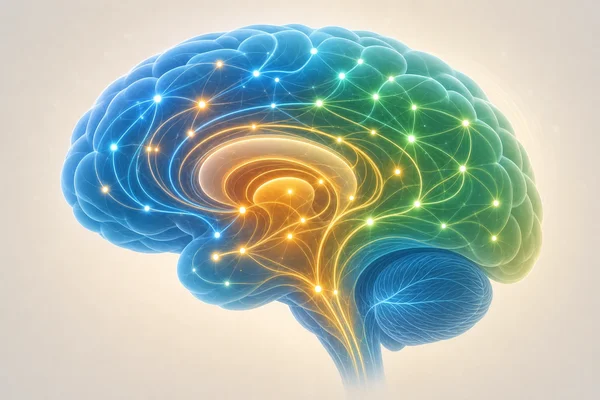
ADHD is associated with differences in brain networks involved in executive function. Executive function is the set of mental skills that helps a person start tasks, shift attention, hold information in mind, regulate emotions, resist impulses, and keep track of time. These are not moral skills. They are brain-based control systems that can work inconsistently when someone has ADHD traits.
Researchers often discuss ADHD in relation to attention and reward pathways, including systems that use dopamine and norepinephrine. In plain English, some people with ADHD may have more difficulty staying engaged with tasks that are important but not immediately rewarding. That can look like procrastination, task switching, losing track of instructions, or feeling unable to begin until urgency appears.
Brain development also matters. ADHD often begins in childhood, even when it is noticed later. Some symptoms may change with age: physical hyperactivity can become inner restlessness, while disorganization, time blindness, emotional reactivity, and difficulty finishing tasks may remain very noticeable in adulthood.
Genetics and Family History
Genetics are one of the strongest clues in ADHD research. ADHD tends to run in families, and many adults first recognize their own traits while learning about a child, sibling, or parent. This does not mean there is one "ADHD gene." More likely, many genetic variations each contribute a small amount to traits such as attention regulation, impulsivity, arousal, and reward sensitivity.
Family history also explains why ADHD can feel familiar long before it has a name. A household may normalize chronic lateness, unfinished projects, emotional intensity, messy paperwork, or last-minute work sprints because several people operate that way. For some adults, the question is not "where did this come from?" but "why did it become harder to manage now?"
Genes are not destiny. A person can inherit higher risk and still have different symptoms, strengths, supports, and challenges from relatives. The point is not to blame biology, but to understand why ADHD is rarely explained by willpower alone.
Environmental Risk Factors That May Raise ADHD Risk
Environmental risk factors are not the same as direct causes. They are conditions linked with higher likelihood of ADHD, especially when they affect early brain development. They also interact with genetics, so the same exposure will not affect every person in the same way.
Pregnancy and Early Development
Some risk factors discussed in ADHD research include premature birth, low birth weight, prenatal exposure to alcohol or tobacco, and certain complications during pregnancy or early development. These factors may affect brain systems involved in attention and self-regulation.
This does not mean parents should look backward with guilt. ADHD is complex, and most families cannot point to one event that explains everything. A more helpful frame is: early development can influence risk, but it does not create a simple cause-and-effect story for every individual.
Brain Injury, Toxins, and Early Adversity
A history of significant brain injury, exposure to certain environmental toxins such as lead, or severe early adversity may also be associated with attention and behavior difficulties. These factors are not present for most people with ADHD, but they are part of the broader risk picture.
It is also important to separate ADHD from conditions that can imitate or worsen ADHD-like symptoms. Sleep disorders, anxiety, depression, trauma, substance use, thyroid problems, and major life stress can all affect concentration and impulse control. A careful evaluation looks at timing, persistence, impairment, and alternative explanations.
What Causes ADHD in Adults, Women, Children, and Teens?
The core causes do not become completely different by age or gender, but the way ADHD is noticed can change a lot.
In adults, ADHD is usually not something that suddenly appears from nowhere. More often, earlier traits become more visible when life demands increase. A person may have done well in structured school settings but struggle when adult life requires self-directed planning, bills, deadlines, household management, parenting, or workplace communication. This is why searches for "what causes ADHD in adults" often reflect recognition, not a brand-new origin.
In women, ADHD may be missed when symptoms are less disruptive to others. Inattentive patterns, internal restlessness, emotional overload, perfectionism, masking, and chronic exhaustion can hide behind good grades or high effort. Hormonal changes may also affect how noticeable symptoms feel across the menstrual cycle, pregnancy, postpartum life, or perimenopause.
In children and teens, symptoms may show up as difficulty waiting, interrupting, losing school materials, avoiding sustained mental effort, or seeming driven by a motor. In babies, there is no reliable way to read ADHD from normal infant behavior alone. Developmental concerns should be discussed with a pediatric professional rather than interpreted from one behavior or temperament.
Triggers Are Not the Same as Causes
People often ask, "What triggers ADHD people?" A trigger is something that makes symptoms more obvious, not something that created ADHD in the first place. Common symptom amplifiers include poor sleep, unstructured time, overwhelming task lists, conflict, hunger, overstimulation, boredom, unclear instructions, and too many competing demands.
This difference matters because it gives you practical leverage. You may not be able to change genetic risk, but you can notice when your attention drops, what environments make impulse control harder, and what supports reduce friction. If patterns feel familiar, reviewing a structured adult ADHD screener can help you organize observations before deciding whether to seek a formal evaluation.

Myths: What Usually Does Not Cause ADHD
Several common explanations are too simple. ADHD is not caused by bad parenting, laziness, too much screen time, too much sugar, or a lack of discipline. These things can affect behavior, sleep, mood, or routines, but they do not explain ADHD as a neurodevelopmental condition.
Parenting and environment still matter, but in a different way. Supportive structure, predictable routines, clear expectations, exercise, sleep habits, and reduced shame can help a person function better. Harsh criticism, chaotic routines, and constant overstimulation can make symptoms harder to manage. That is not the same as saying the environment caused ADHD.
This distinction is especially important for adults who have spent years blaming themselves. If you have always needed unusual amounts of urgency, novelty, reminders, or pressure to function, the question is not whether you tried hard enough. The better question is whether your brain may need different supports.
When to Explore Symptoms and Screening
Understanding what causes ADHD can reduce shame, but it should also lead to practical next steps. Consider writing down when symptoms began, which settings they affect, what makes them better or worse, and whether they interfere with work, school, relationships, finances, driving, or daily routines. Include examples rather than general labels.
An online screener is not a clinical assessment, and it cannot replace a professional's judgment. It can, however, help you turn vague concerns into a clearer pattern. If you want a low-pressure way to reflect on focus, impulse control, and daily challenges, an ADHD self-reflection tool can support that first pass. If symptoms are persistent, impairing, or distressing, bring your notes to a qualified health professional.
FAQ
Are you born with ADHD or can you develop it?
ADHD usually reflects early neurodevelopmental differences, with genetics playing a strong role. Many people show signs in childhood, even if they are not recognized until later. Adults may feel as if ADHD appeared suddenly when responsibilities increased, but the underlying pattern often existed before.
What causes ADHD in adults?
Adult ADHD is commonly the continuation of earlier traits into adult life. Work demands, parenting, college, financial responsibilities, sleep loss, or stress can make symptoms more visible. These pressures do not necessarily cause ADHD, but they can reveal attention and self-regulation difficulties that were previously managed.
What causes ADHD in the brain?
ADHD is linked with differences in brain networks that support attention, inhibition, planning, motivation, timing, and emotional regulation. Researchers also study neurotransmitter systems involved in reward and alertness. These differences help explain why effort alone may not reliably solve ADHD-related difficulties.
What can trigger ADHD symptoms?
Common triggers include poor sleep, boredom, unclear tasks, overstimulation, emotional conflict, hunger, transitions, and long tasks with delayed rewards. Triggers can make symptoms louder, but they are not the original cause of ADHD.
Does ADHD go away with age?
Some symptoms may become less visible or change form with age. For example, outward hyperactivity may become inner restlessness. Many people continue to experience attention, organization, time management, and emotional regulation challenges into adulthood, especially without helpful supports.
How do they test for ADHD?
ADHD assessment usually involves symptom history, current functioning, childhood patterns, rating scales, interviews, and review of other possible explanations such as sleep, anxiety, mood, substance use, or medical concerns. Online screening can organize observations, but a full clinical evaluation is needed for formal answers.